
Oman is preparing to extend its Local Content Certificate to government entities subject to the Tenders Law in 2027, introducing wider domestic procurement requirements intended to strengthen national supply chains, develop manufacturing capacity and increase employment opportunities for Omani nationals.
The planned expansion follows the certificate’s initial introduction in the energy sector and forms part of a phased programme to increase the participation of domestic businesses in public contracts and major investment projects.
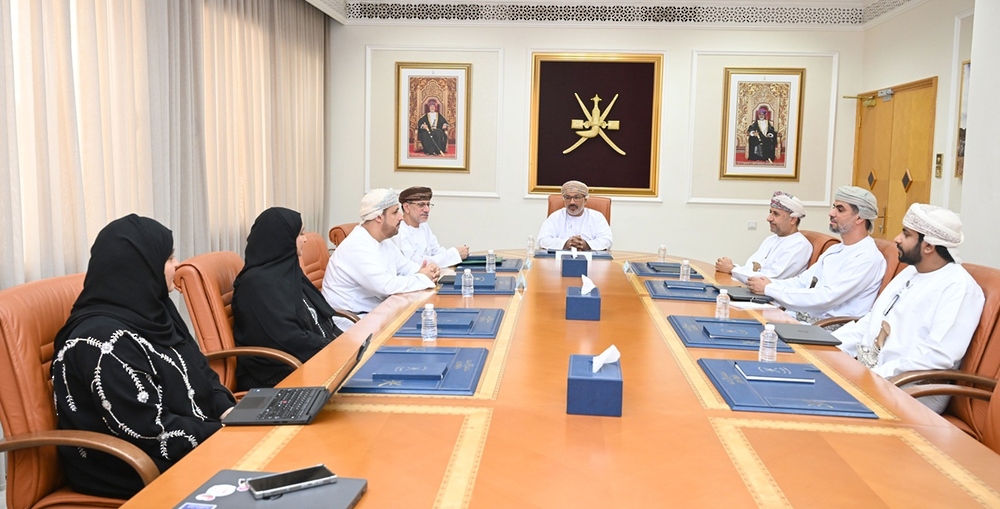
The proposals were reviewed during the second meeting of the Executive Committee for Local Content in 2026, chaired by Dr Khamis bin Saif al Jabri, Minister of Economy.
The committee examined local content performance during the first half of 2026, progress against previous decisions and measures to increase the use of locally supplied goods and services.
Government procurement to adopt local content framework
The extension of the Local Content Certificate will bring additional government entities within Oman’s national procurement framework.
The initiative is intended to increase opportunities for domestic suppliers and manufacturers to participate in government contracts, building on practices already introduced in the energy sector.
The Authority for Projects, Tenders and Local Content presented progress on implementation procedures and regulations, including the framework governing a mandatory list of goods and services.
Its National Content Office is coordinating activities across sectors to identify investment opportunities, monitor implementation and expand successful local content initiatives.
The phased approach is expected to support wider adoption of local procurement practices beyond government entities in subsequent stages.
Six manufacturing opportunities identified
The committee reviewed six manufacturing investment opportunities announced during the first half of 2026, covering energy infrastructure, water treatment and construction-related products.
Four opportunities were introduced by Nama, which forms part of the Oman Investment Authority’s portfolio.
These involve the potential domestic manufacture of reverse osmosis membranes for desalination plants, ring main units used in electricity distribution, steel utility poles and cooling components for electrical transformers.
The proposed investments are intended to strengthen local manufacturing capabilities in sectors supporting essential infrastructure development.
Two additional opportunities were announced by the Ministry of Housing and Urban Planning through its Tatweer platform.
The first involves establishing, financing, equipping and operating a manufacturing facility producing locks, hinges and metal door accessories.
The second covers the establishment, financing and operation of a sanitary ware manufacturing plant.
Together, the opportunities are intended to expand domestic production capacity and increase the availability of locally manufactured materials and equipment for infrastructure and construction activities.
Omanisation programme targets 130 oil and gas job titles
Workforce development remains another component of the local content programme.
The committee reviewed an initiative targeting the Omanisation of 130 job titles among service providers and contracting companies operating in the oil and gas sector.
The programme seeks to increase employment opportunities for Omani nationals within companies delivering projects and services under sector contracts.
Oil and gas operators are also identifying additional positions that could be filled by Omani workers, while the Ministry of Energy and Minerals is examining opportunities to source more goods and services domestically.
The committee discussed plans to extend the Imdad programme into government contracts following its implementation in the energy sector.
Imdad is designed to develop national skills, increase the employment of Omanis within contracts and expand access to training and sustainable employment.
Its proposed expansion would bring workforce development measures into a wider range of public procurement activities.
Cross-sector coordination to support implementation
The committee also reviewed initiatives being developed by the Oman Investment Authority to strengthen domestic industrial capabilities, localise artificial intelligence activities and expand advanced technical skills.
Discussions included regulatory work undertaken by military and security bodies and the Public Authority for Special Economic Zones and Free Zones to improve local content practices.
The committee called for greater coordination between government organisations, military and security institutions, oil and gas operators and companies affiliated with the Oman Investment Authority.
It also emphasised the importance of sharing experience and replicating successful initiatives across different sectors.
The National Content Office will continue coordinating the identification and monitoring of investment opportunities and local content measures.
The planned 2027 expansion represents a further stage in Oman’s efforts to integrate domestic sourcing, industrial development and national workforce participation into public procurement.
For contractors and project delivery organisations seeking government work, the evolving framework places greater emphasis on local supply chains and workforce participation alongside established procurement requirements.
The authorities have not yet announced detailed implementation dates within 2027 or the specific compliance requirements that will apply to individual government contracts.