
The World Bank Group will support a major water security and climate resilience programme in Paraná, Brazil, with $186 million in financing for projects spanning agriculture, water infrastructure, sanitation and land restoration.
The Paraná Water Security Project is expected to generate or protect between 54,000 and 78,000 jobs across agriculture, water services and associated economic activity while improving resilience to droughts, floods and other climate-related pressures.
Financing will be provided through a $186 million loan from the International Bank for Reconstruction and Development (IBRD).
The programme will combine improvements to water resource management with investment in rural and urban water services, climate-resilient agriculture and nature-based solutions.
Paraná’s economy has significant exposure to climate-related water risks because agribusiness accounts for nearly one-third of state output and the majority of its exports.
Increasingly frequent droughts and floods have created risks for agricultural production, water supplies and rural livelihoods.
“Water is the backbone of the economy, and securing it against a more unpredictable climate is essential for protecting jobs and sustaining growth in Paraná,” said Cécile Fruman, World Bank Country Director for Brazil.
“This project builds the foundations that farmers, businesses, and communities need to remain productive and resilient in the years ahead.”
130,000 hectares targeted for agricultural resilience
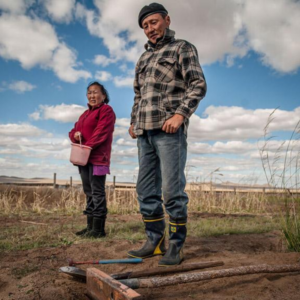
Around 9,200 farmers are expected to benefit from measures designed to improve resilience against drought and extreme weather across more than 130,000 hectares.
The programme will strengthen Paraná’s rural extension network through training for 500 professionals and prepare Integrated Farm Plans covering as many as 15,000 properties.
Climate-resilient and low-carbon agricultural practices will be introduced across approximately 130,290 hectares. Measures will include no-till cultivation, cover cropping and biodigester technology.
Matching grants are also planned for approximately 8,645 family farming properties.
Alongside agricultural measures, the programme will restore riparian forests and degraded land across 10,690 hectares of Permanent Preservation Areas alongside rivers and springs.
Overall, approximately 130,500 hectares are expected to be placed under sustainable management.
The World Bank estimates that the programme could achieve net greenhouse gas sequestration of 3.98 million tonnes of CO2 equivalent over 20 years, contributing to Brazil’s nationally determined contribution and Paraná’s Climate Action Plan 2024-2050.
Water infrastructure to support millions of residents
The project will also strengthen Paraná’s wider water resource management system, including the development of 42 watershed plans.
Water and sanitation improvements will target rural and underserved communities, while urban water safety measures are intended to increase the resilience of supplies serving approximately 2.2 million residents.
The programme documentation identifies improvements to water and sanitation services for 77,600 people, alongside measures aimed at extending access to communities that have historically been underserved.
The combination of infrastructure investment, watershed planning, agricultural interventions and ecosystem restoration is intended to improve management of water resources across the state rather than addressing individual water systems in isolation.
The Paraná programme will support the World Bank’s AgriConnect and Water Forward initiatives, linking agricultural productivity and rural livelihoods with investment in water security and environmental resilience.
Implementation will bring together a wide portfolio of activities covering agricultural properties, watersheds, rural communities and urban water systems, with the programme designed to strengthen Paraná’s ability to manage increasingly variable water conditions while protecting its economically important agricultural sector.