
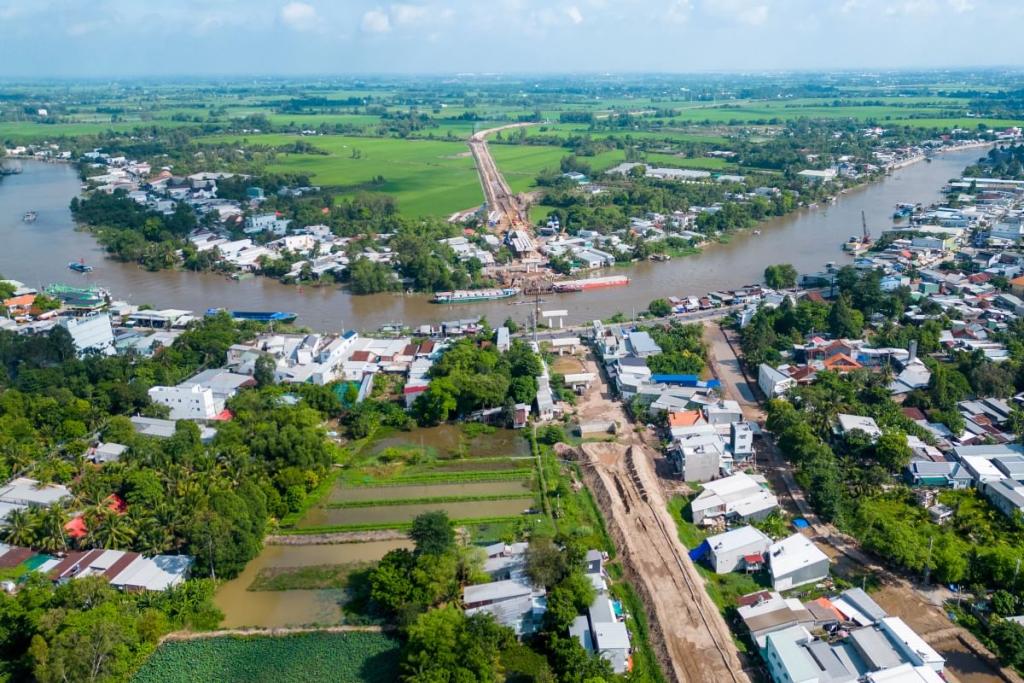
Southeast Asia will require an estimated $7.1 trillion in infrastructure investment between 2026 and 2040, according to new research from the Asian Development Bank (ADB), with electricity and transport projects accounting for the majority of anticipated expenditure.
The report, The $7 Trillion Challenge: Building Tomorrow’s ASEAN, estimates that the region needs approximately $476 billion annually to support economic growth, energy security, digital connectivity and infrastructure resilience.
This represents 8.7% of regional gross domestic product, significantly exceeding current public investment levels.
ADB estimates that government investment at existing levels would cover only 45% of the requirement, leaving an annual financing gap of approximately $264 billion.
The findings highlight the scale of the infrastructure development pipeline facing Southeast Asia and the importance of improving project preparation, financing arrangements and delivery capacity.
Electricity and transport account for 85% of investment needs
Electricity infrastructure represents the largest investment requirement, with an estimated $3.6 trillion needed through 2040.
Investment priorities include electricity generation, transmission networks, energy storage and cross-border interconnections.
These projects will be essential to meeting rising electricity demand, improving energy security and supporting the integration of renewable energy into regional power systems.
The ASEAN Power Grid is a central component of this strategy, connecting national electricity networks to facilitate cross-border power trading.
ADB’s Pan-Asia Power Grid Initiative, launched in May 2026, is intended to expand electricity connectivity across Asia and the Pacific, building on existing regional programmes.
Transport infrastructure accounts for a further $2.5 trillion in estimated investment requirements.
Road development represents the largest component, requiring nearly $2 trillion, while railway and airport infrastructure are among the fastest-growing areas of demand.
The report identifies integrated transport networks and improved cross-border connectivity as important priorities for reducing logistics costs and strengthening regional trade.
ADB President Masato Kanda said infrastructure investment would be fundamental to Southeast Asia’s economic development.
“Southeast Asia’s growth depends on what it builds next,” he said.
“Its factories need dependable electricity, and its businesses need faster, safer ways to reach markets.”
Digital infrastructure requires $584bn investment
Beyond energy and transport, the report identifies a substantial requirement for investment in digital infrastructure.
ADB estimates that $584 billion will be needed through 2040 to develop broadband networks, data centres and other digital connectivity infrastructure.
These investments are intended to support growing demand for digital services and improve connectivity between ASEAN economies.
The bank’s Asia-Pacific Digital Highway initiative, also launched in May, will support investment in fibre networks, submarine cables, internet exchange points and regional data centres through 2035.
The programme is designed to strengthen cross-border digital infrastructure and support regional economic integration.
Health infrastructure represents another significant investment category, with approximately $227 billion required through 2040.
ADB estimates that the region will need around 49,000 additional healthcare facilities, most of which will be primary healthcare centres.
These projects are intended to expand healthcare access and improve preparedness for future public health emergencies.
Shortage of bankable projects threatens investment delivery
While the report identifies a substantial infrastructure financing gap, ADB also highlights weaknesses in project preparation as a major barrier to attracting private capital.
The bank argues that Southeast Asia needs a stronger pipeline of well-prepared, commercially viable infrastructure projects.
This includes improving feasibility studies, establishing predictable regulatory arrangements and strengthening procurement transparency.
For project and programme management professionals, the findings underline the importance of early-stage project development, risk allocation and investment planning.
Large-scale infrastructure programmes require coordination between governments, development finance institutions, contractors, operators and private investors.
Cross-border projects introduce additional delivery challenges, including differing regulatory frameworks, technical standards and national investment priorities.
ADB said it would support governments in preparing projects capable of attracting investment while delivering long-term public benefits.
“These investments must also be built to deliver long-term benefits,” Kanda said.
“ADB will help governments bring forward projects that investors can trust and people can depend on.”
ADB targets stronger regional project coordination
The report covers all 11 ASEAN member countries: Brunei Darussalam, Cambodia, Indonesia, Laos, Malaysia, Myanmar, the Philippines, Singapore, Thailand, Timor-Leste and Viet Nam.
Infrastructure requirements vary across the region, reflecting differences in economic development, urbanisation, energy demand and existing infrastructure capacity.
ADB’s proposed response combines financing, project preparation, technical expertise and regional coordination.
The bank is also supporting regional infrastructure programmes intended to connect national networks and improve cooperation between participating countries.
These include electricity interconnections, transport corridors and digital connectivity initiatives.
The report indicates that meeting Southeast Asia’s infrastructure requirements will depend not only on increasing available finance but also on improving the development and implementation of projects.
With an estimated $264 billion annual financing gap, mobilising private investment will be critical to achieving the region’s infrastructure objectives.
The $7.1 trillion requirement represents an estimate of future investment needs rather than funding already committed or projects approved for construction.
ADB’s findings establish the scale of the investment challenge through 2040, with project preparation, procurement and delivery capability likely to play an important role in determining how much of the required infrastructure can be developed.
Photo: Viet Tuan/ADB