
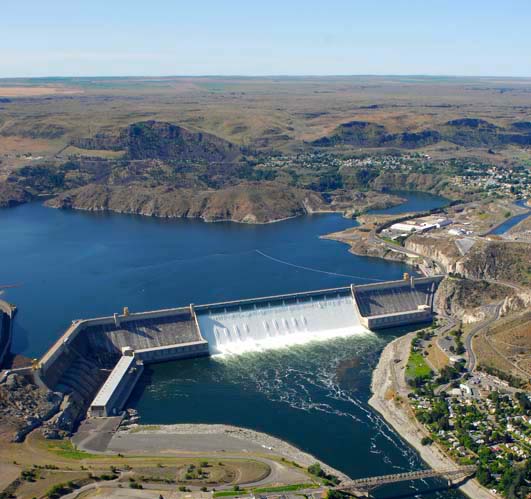
The Washington State Potato Commission (WSPC) has proposed a coordinated water conservation and infrastructure modernisation programme across the Columbia Basin Project (CBP), aiming to improve irrigation reliability, prioritise capital investment and potentially expand agricultural water services in Washington State.
The proposal calls for a new agreement between the US Bureau of Reclamation and three federally recognised irrigation districts: Quincy-Columbia Basin Irrigation District, East Columbia Basin Irrigation District and South Columbia Basin Irrigation District.
Although the districts manage their facilities separately, they operate within an interconnected water system comprising reservoirs, canals, drainage networks, pumping infrastructure and groundwater resources.
WSPC argues that managing conservation projects across the entire system could improve investment decisions and provide more reliable evidence of water savings.
Infrastructure modernisation to improve irrigation efficiency
The proposed programme would establish a shared approach to identifying, evaluating and delivering irrigation infrastructure improvements.
Potential investments include canal lining and piping, automated gates and control systems, improved flow measurement, pumping and power upgrades, targeted storage and water reuse infrastructure.
Improvements to irrigation scheduling and on-farm technology could also form part of the programme.
However, WSPC emphasises that infrastructure projects should be assessed against their effects on the wider water network rather than the performance of individual facilities alone.
For example, reducing seepage from a canal may improve local conveyance efficiency but could also reduce groundwater recharge or downstream water availability.
Consequently, a reduction in water losses at one location does not necessarily represent an equivalent increase in water available for other agricultural users.
A coordinated approach would allow the districts and Reclamation to evaluate these effects before committing investment.
Joint project planning and water accounting proposed
WSPC recommends establishing a common operational baseline covering water diversions, deliveries, seepage, drainage, return flows, pumping energy and seasonal demand.
The baseline would distinguish dependable water supplies from volumes available only during particular seasons or hydrological conditions.
Reclamation and the irrigation districts could then develop a consolidated infrastructure modernisation plan, ranking projects according to their expected water savings, reliability improvements, energy requirements, costs and delivery readiness.
The approach would also address potential scheduling conflicts between construction projects undertaken by different districts.
From a programme management perspective, the proposed framework would provide a common basis for prioritising investment, coordinating construction activities and assessing benefits across the entire irrigation network.
WSPC also recommends annual public reporting to demonstrate how individual conservation projects affect the system’s overall water balance.
Previous conservation programme secured 30,000 acre-feet
The commission points to an existing conservation initiative as evidence of the potential benefits of cooperation.
According to the Washington State Department of Ecology, a conservation programme involving the Columbia Basin irrigation districts secured 30,000 acre-feet of water for the Odessa groundwater replacement effort.
The initiative supports efforts to replace groundwater withdrawals with surface water supplies in agricultural areas affected by groundwater depletion.
WSPC argues that this experience provides a foundation for a more permanent approach to coordinated water conservation.
The proposed second phase would prioritise completion of Odessa groundwater replacement commitments while protecting existing irrigation users and environmental obligations.
Legislative changes create potential for additional agricultural service
The proposal also considers opportunities to extend irrigation services to additional agricultural land where verified water savings and legal requirements permit.
Washington’s House Bill 1752, enacted in 2024, amended state law concerning the use of certain water rights associated with the Columbia Basin Project.
The Department of Ecology’s 2026 policy, POL-1300, provides a framework under which Reclamation may seek changes to the number of acres irrigated using certain state-permitted Initial Use Water.
Such changes cannot increase the authorised instantaneous or annual water quantity, impair other water rights or bypass applicable environmental review requirements.
WSPC stresses that conservation does not automatically create an entitlement to irrigate additional land.
Any expansion would require documented water availability, appropriate regulatory approvals and confirmation that the irrigation districts have sufficient delivery capacity.
Existing contracts, senior water rights, environmental commitments and groundwater replacement obligations would also need to be protected.
Coordinated investment could strengthen project financing
The commission believes a shared infrastructure programme could improve access to state and federal funding by providing a clearer sequence of investment priorities.
Projects could be grouped according to measurable water savings, operational benefits, energy impacts and implementation readiness.
This would provide funding organisations, including the Washington State Legislature, Reclamation and federal conservation programmes, with a more consistent basis for evaluating proposals.
WSPC is calling for a second-phase conservation agreement that establishes common measurement standards, a prioritised capital project programme, rules for protecting return flows and a process for allocating verified water savings.
The proposed agreement would also introduce annual reporting requirements to track conservation performance and infrastructure investment.
No overall programme budget, implementation timetable or additional acreage target has been specified.
The proposal remains a recommendation from WSPC rather than an announced infrastructure funding commitment.
If adopted, it would establish a coordinated approach to planning and delivering irrigation modernisation projects across the Columbia Basin, with the objective of improving water reliability and identifying opportunities for agricultural expansion where sufficient water and infrastructure capacity can be demonstrated.
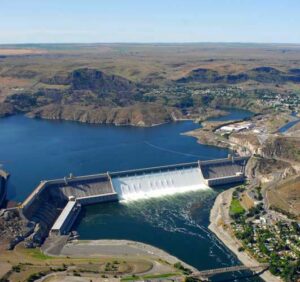
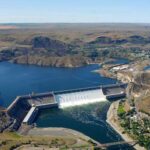
Photo courtesy of the U.S. Bureau of Reclamation