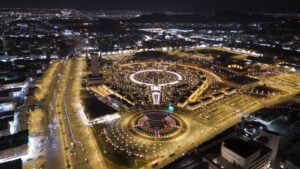

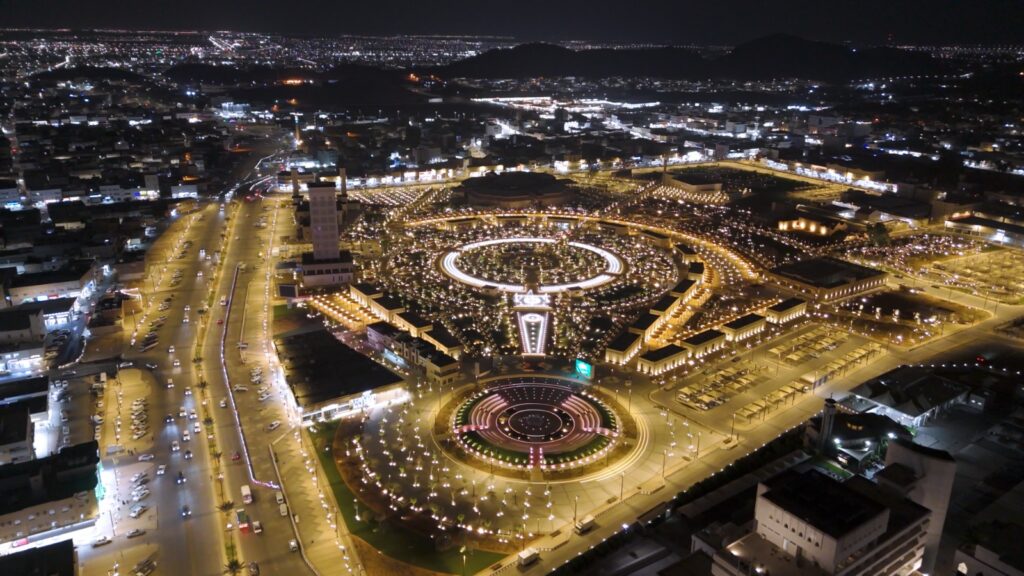
Saudi Arabia has inaugurated a SAR 268 million ($71.5 million) urban regeneration project in Hail, completing a major redevelopment covering more than 750,000 square metres of the city centre, including new pedestrian infrastructure, public spaces, commercial facilities and transport improvements.
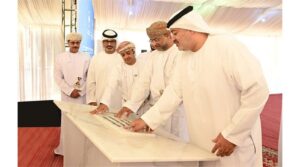
The Central Area Development Project was inaugurated by Prince Abdulaziz bin Saad bin Abdulaziz Al Saud, Governor of Hail Region, as part of wider efforts to modernise urban infrastructure and improve quality of life under Saudi Vision 2030.
The development connects six major roads and incorporates 12 kilometres of pedestrian pathways, six kilometres of cycling routes and extensive improvements to public squares, markets and historic areas.
The project has also introduced new landscaping, commercial facilities and public amenities designed to support tourism, local businesses and community activities.
Urban redevelopment covers more than 750,000 square metres
The Central Area Development Project has involved the comprehensive rehabilitation of Hail’s city centre, including the reorganisation of traffic movements, improvements to pedestrian accessibility and the redevelopment of existing public spaces.
The works have transformed Afnaan Street, surrounding squares and several traditional market areas, with a focus on improving connectivity between commercial, cultural and recreational destinations.
A central element of the project is the conversion of areas previously used for vehicle parking into pedestrian-friendly public spaces.
Afnaan Street has been redeveloped into a pedestrian promenade connecting with Barzan Market, improving access between the city’s commercial areas.
The dates and vegetable market district has also undergone rehabilitation, including improvements to public squares, pedestrian routes and seating areas.
The redevelopment has been designed to preserve the architectural character and historical significance of the Central Area while introducing modern urban infrastructure.
New infrastructure includes pedestrian routes, cycling facilities and public spaces
The SAR 268 million investment has delivered a range of infrastructure and public realm improvements across the development area.
The project includes the planting of 3,000 trees along 12 kilometres of pedestrian pathways, alongside six kilometres of dedicated cycling routes.
An open-air theatre covering 13,000 square metres has been developed to accommodate cultural and community activities.
Interactive fountains extend across a further 12,000 square metres, while approximately 250,000 square metres have been allocated for community events.
The development also provides 1,500 parking spaces and 17 commercial outlets for restaurants and cafés.
Additional infrastructure includes modern lighting systems, public internet and Wi-Fi connectivity, and facilities supporting public transport services.
Together, these improvements are intended to increase the accessibility and usability of the city centre while accommodating commercial activity and public events.
Heritage preservation integrated into development programme
The redevelopment also incorporates improvements to areas surrounding Hail’s historic landmarks, including Qishlah Palace and A’arif Fort.
The project connects heritage destinations with newly developed pedestrian routes, public spaces and commercial facilities.
This approach is intended to strengthen the relationship between the city’s historic areas and its contemporary urban infrastructure.
The redevelopment also aims to create additional opportunities for local businesses, entrepreneurs, artisans and small-scale producers through increased commercial and visitor activity.
By connecting markets, cultural landmarks and public facilities, the project seeks to establish a more accessible city centre capable of supporting a wider range of economic and social activities.
Long-term operations and maintenance identified as priorities
Hail Region Mayor Eng. Sultan bin Hamid Al-Zaidi described the inauguration as an important milestone in the city’s urban development.
He said the project had transformed previously underused spaces into facilities supporting walking, cycling, community interaction and commercial activity.
According to Al-Zaidi, the redevelopment reflects Saudi Vision 2030 objectives to improve urban environments and enhance residents’ quality of life.
He also emphasised that maintaining the benefits of the investment would depend on effective operations and maintenance.
This includes preserving the condition of public facilities, maintaining landscaping and infrastructure, and developing a programme of events and activities to encourage continued use of the area.
The focus on ongoing asset management reflects the operational requirements associated with large-scale public realm developments, where long-term performance depends on maintenance arrangements as well as the initial construction works.
The Central Area Development Project represents a completed urban infrastructure investment combining transport improvements, pedestrian connectivity, environmental enhancements and commercial development.
With more than 750,000 square metres redeveloped, the project forms part of Saudi Arabia’s wider programme of urban transformation and public infrastructure investment under Vision 2030.