
Industrial equipment manufacturer STE has outlined the project delivery considerations involved in selecting customised or standardised process skid systems, as engineering teams seek to balance installation schedules, capital costs and operational requirements across complex industrial projects.
The Shanghai-based company, which provides skid design and fabrication services for the oil and gas, petrochemical, marine energy and environmental sectors, says the choice between bespoke and modular equipment can influence engineering requirements, procurement, installation and commissioning.
Skid-mounted systems bring together equipment such as pumps, compressors, heat exchangers, instrumentation and controls within a preassembled structure, allowing elements of industrial facilities to be manufactured and tested before delivery to site.
The approach can reduce the amount of construction and assembly work required at the final installation location, although the benefits depend on project complexity, site conditions and equipment specifications.
Customised skid systems address complex engineering requirements
Customised process skids are designed around the specific operational requirements of an industrial facility.
Unlike standardised equipment packages, bespoke systems can accommodate specialised piping arrangements, instrumentation, control systems and equipment configurations.
STE identifies complex process integration and restricted installation space as two important considerations when selecting customised systems.
For offshore facilities, existing industrial plants and refurbishment projects, equipment may need to fit within established structural and operational constraints.
Customised skid designs allow engineering teams to account for these conditions during the design phase rather than making extensive modifications during installation.
The company also highlights the potential to integrate several interconnected process components into a single assembly.
This can transfer some installation activities from the construction site to a controlled fabrication environment, potentially reducing on-site work and simplifying commissioning.
However, customised systems generally require additional engineering and fabrication time, which must be considered during project scheduling.
Standardised modular systems offer repeatability and shorter engineering schedules
For projects involving conventional processes or multiple identical equipment packages, standardised modular skids provide an alternative approach.
These systems use established designs and common components, reducing the requirement for project-specific engineering.
According to STE, standardisation can help shorten procurement and fabrication schedules while simplifying equipment installation.
The approach may be particularly suitable for industrial developments requiring several similar process units.
Using repeatable equipment configurations can also support more consistent quality control, maintenance procedures and spare parts management.
From a project management perspective, standardised equipment can simplify procurement planning and reduce the number of design variations that must be managed across a programme.
However, standard modules may require modifications where site layouts, operational requirements or future expansion plans differ from the original design.
Equipment selection influences project cost and risk
STE identifies five principal factors affecting the selection of process skid systems: project complexity, delivery timescales, budget, future expansion requirements and site constraints.
For projects with demanding technical specifications, customised systems may offer greater flexibility during engineering and integration.
Standardised equipment may be more appropriate where delivery speed, repeatability and lower initial expenditure are priorities.
The decision can also influence the distribution of work between fabrication facilities and construction sites.
Greater off-site assembly may reduce site installation activities, but project teams must still account for transportation requirements, lifting arrangements, interface management and commissioning.
For complex industrial projects, these considerations form part of the wider procurement and engineering strategy.
The selection of equipment packages therefore affects more than initial purchase costs, with implications for construction sequencing, operational maintenance and future modifications.
STE outlines fabrication and project support capabilities
Founded in 2008, STE operates from Shanghai’s Pudong New Area and maintains a manufacturing facility covering more than 20,000 square metres in Qidong, China.
The company reports employing more than 60 professional managers and over 100 skilled technical workers.
Its operations cover customised skid engineering and the manufacture of standardised modular equipment for industrial applications.
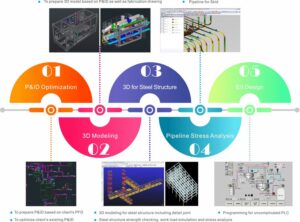
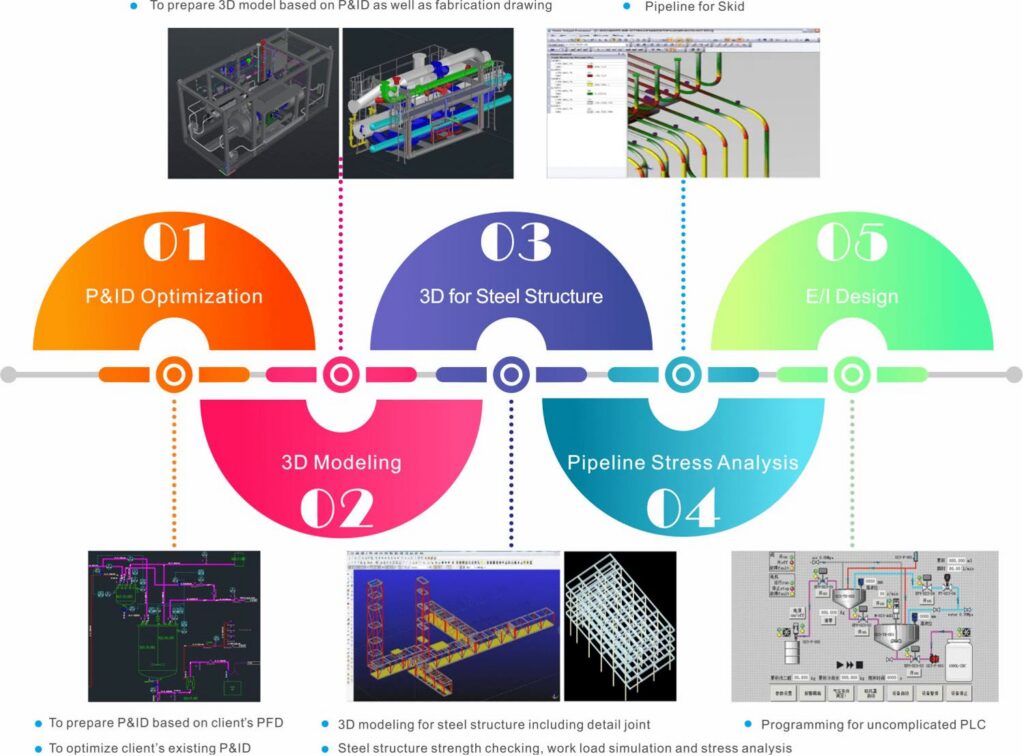
STE says its engineering activities include conceptual design, three-dimensional modelling and process simulation, allowing technical requirements to be assessed before fabrication.
The company also provides fabrication, equipment assembly, quality control and support during installation and commissioning.
Its manufacturing capacity allows it to undertake both individual customised equipment packages and projects involving multiple standardised units.
STE supplies equipment for applications including offshore oil platforms, petrochemical facilities, water treatment plants and environmental protection installations.
Modularisation remains an important industrial delivery consideration
The comparison highlights how equipment design decisions can influence the delivery strategy for industrial construction and engineering projects.
Customised skid systems provide flexibility where technical requirements or physical constraints demand specialised configurations, while standardised modules offer opportunities to reduce engineering work and improve repeatability.
For project managers, the selection process involves balancing equipment specifications against programme schedules, procurement requirements, installation conditions and whole-life operational costs.
STE has not provided comparative project performance data, quantified cost savings or delivery-time reductions for the two approaches.
Nevertheless, the company’s assessment illustrates the role of early engineering and procurement decisions in determining how industrial equipment packages are manufactured, transported, installed and commissioned.
As industrial operators continue to examine opportunities for off-site fabrication and modular construction, the choice between customised and standardised process skids remains an important consideration in planning complex capital projects.