
Association for Project Management (APM) has brought together project professionals in Guernsey to examine how artificial intelligence is changing construction delivery, project governance and programme controls, with a focus on practical applications and maintaining human accountability.
The two events, organised by APM’s Channel Islands Regional Network, formed part of the Guernsey AI Sprint, an island-wide initiative running from 1 October to 12 November 2026.
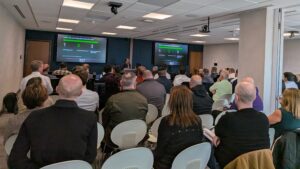
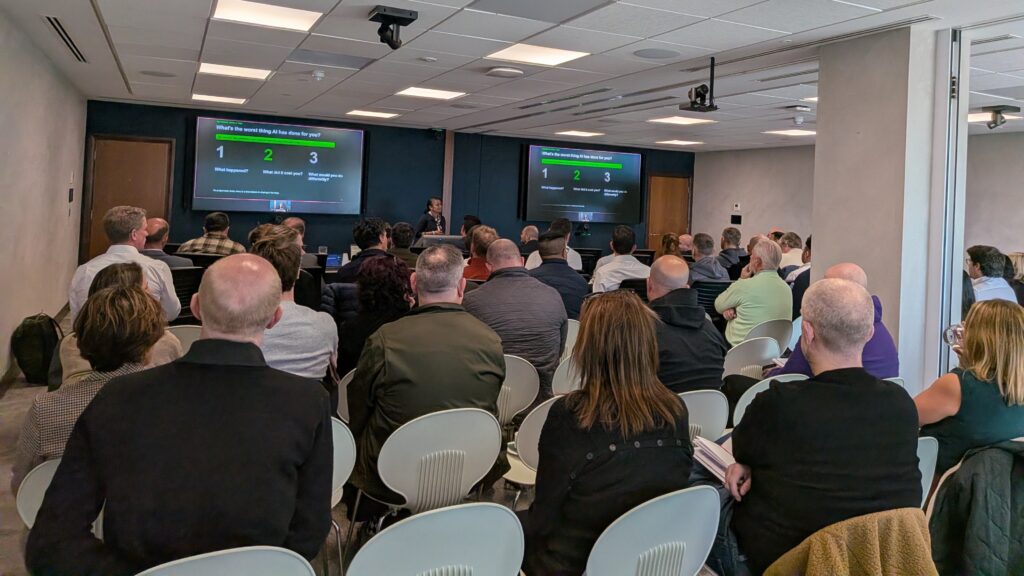
The programme brought together businesses, charities and individuals to explore AI adoption, with APM’s sessions attracting dozens of project professionals from the Channel Islands and beyond.
Discussions focused on how AI can improve project information management, support decision-making and streamline workflows, alongside concerns about data security, information overload and the pace of technological change.
AI in construction: connecting fragmented project information
The first event, held on 30 October, was led by James Garner, Head of AI and Data at Gleeds and host of the Project Flux podcast.
The session examined practical applications of AI in construction and project delivery, particularly its ability to analyse information held across different systems and document formats.
Construction projects typically generate substantial volumes of information, including drawings, contracts, correspondence and spreadsheets. The discussion explored how AI could help professionals connect these sources, identify information gaps and prioritise areas requiring attention.
A central theme was the importance of retaining professional judgement when using AI-generated outputs.
Delegates were encouraged to delegate suitable activities to AI while ensuring that results are verified before being used or shared.
The discussion also emphasised evaluating AI according to the outcomes it delivers rather than the number of individual tasks it can automate.
Garner said project professionals were increasingly interested in practical guidance on the technology.
“The turnout in Guernsey showed how hungry project professionals are for practical, honest conversation about AI,” he said.
“The subject matters because these tools are already changing how we plan, estimate and deliver work.”
Project governance and programme controls take centre stage
The second event, held on 2 November, was led by Nermeen Latif, Technical Director at WSP and a specialist in project management offices, governance and programme controls.
The senior-level discussion examined where AI can support project delivery and how organisations should approach its introduction into established management processes.
Key themes included defining intended outcomes, redesigning workflows, maintaining accountability and establishing clear boundaries for AI agents.
The session considered the importance of governance arrangements that allow organisations to benefit from AI-assisted processes without transferring responsibility for project decisions away from professionals.
Participants also raised concerns about information security, the volume of available AI tools and the challenge of keeping pace with technological developments.
Latif said attendees were looking for practical approaches supported by evidence of value.
“Across both events, contributions reflected curiosity and willingness to experiment, alongside concern about information overload, security and keeping pace with change,” she said.
“People wanted practical starting points and evidence of value.”
She added that the objective should be better decision-making and more reliable project delivery, with professionals remaining accountable for the results.
Channel Islands businesses consider practical AI adoption
The events also examined the potential role of AI in improving productivity and supporting project delivery across the Channel Islands.
Scott Crittell, Deputy Lead of APM’s Channel Islands Regional Network, organised the sessions.
He said AI could help local businesses streamline routine activities, improve efficiency and maintain competitiveness.
“AI is important for businesses in the Channel Islands to deliver projects successfully because it can help streamline routine tasks, improve productivity and help organisations remain competitive,” he said.
Crittell added that the events provided an opportunity for professionals to exchange experiences and consider how AI could be introduced within their own organisations.
The sessions were supported by local organisations including Grow Charity Guernsey, Northern Trust, the Guernsey Building Trades Employers Association and the Guernsey International Business Association.
Human oversight remains central to AI-enabled project delivery
Across both sessions, the discussions highlighted a distinction between using AI to process project information and relying on it to make decisions.
In construction, the emphasis was on connecting fragmented information and identifying issues that require professional attention.
For project governance and programme controls, the focus was on establishing clear objectives, appropriate controls and accountability for AI-supported workflows.
The events did not announce new AI deployments or present quantified productivity improvements. Instead, they provided a forum for examining how the technology can be introduced into existing project management practices.
The discussions reflected growing interest among project professionals in moving beyond general awareness of AI towards practical implementation, while ensuring that project governance, information security and professional responsibility remain central to its use.