

Hawaii’s Department of Hawaiian Home Lands (DHHL) has offered 832 residential project leases across two housing developments on the island of Kaua‘i, advancing a state-funded programme to expand homeownership opportunities for Native Hawaiian families and reduce longstanding housing waiting lists.
The latest awards cover 750 residential lots at the planned Līhu‘e Homestead development and 82 lots at Hanapēpē Phase II.
Both projects are supported by Act 279, a $600 million state funding allocation approved in 2022 to accelerate homestead development and reduce the DHHL waiting list.
The developments form part of a wider housing delivery programme involving land acquisition, infrastructure construction and phased residential development across Hawaii.
Līhu‘e development to deliver 750 residential lots
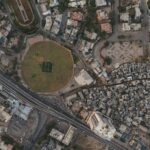
The larger of the two projects is the Līhu‘e Homestead development, which will occupy approximately 260 acres near the town’s urban centre.
DHHL acquired the land from Grove Farm in December 2025 for $18.25 million as part of its strategy to secure development sites close to existing infrastructure.
The project will include single-family homes on lots measuring approximately 6,500 square feet, alongside residential and agricultural homesteading opportunities.
The first homes are expected to be delivered in 2031.
Kaua‘i Mayor Derek S.K. Kawakami said the acquisition aligned with the county’s long-term residential development plans.
“The acquisition of Grove Farm aligns with our county’s long-term plans for residential use in the Līhu‘e mauka area and we hope to see active development move forward in a way that delivers much-needed housing for our island,” he said.
The development will require the coordination of land planning, infrastructure provision and residential construction over the coming years.
Hanapēpē Phase II targets first housing completions in 2027
The second project, Hanapēpē Phase II, will provide 82 single-family residential lots measuring approximately 7,500 square feet each.
Site preparation and infrastructure works are scheduled for completion in early 2027, with the first homes expected to be delivered towards the end of that year.
The initial 30 homes, designated Phase IIA, will be allocated to eligible DHHL beneficiaries earning up to 60% of the area’s median income.
These homes will be delivered through a rent-with-option-to-purchase arrangement supported by Low-Income Housing Tax Credit provisions.
Rental costs will be determined under the programme’s guidelines, with residents eligible to purchase their properties following the conclusion of the 15-year tax credit compliance period.
The arrangement is intended to provide an alternative route to homeownership for households that may not initially qualify for conventional home financing.
Project lease model supports earlier housing allocation
A central feature of DHHL’s housing delivery strategy is the use of project leases, which allow eligible beneficiaries to secure a homestead lease before development is completed.
The approach differs from traditional allocation processes by providing households with an earlier indication of their future housing opportunities.
Beneficiaries can use the period before completion to prepare for financial and programme requirements.
Project leases can cover turnkey homes, owner-builder lots and rent-to-own arrangements, allowing different delivery models to be used across the housing programme.
DHHL Director Kali Watson said the approach was intended to provide greater certainty for families awaiting housing.
“Project leases serve as a promise to our beneficiaries that homes are on the way,” he said.
The model also enables DHHL to allocate future housing opportunities while infrastructure and construction activities remain underway.
However, the award of a project lease does not mean that a completed home is immediately available.
$600m funding programme supports land and infrastructure investment
Both developments are being financed through Act 279, known as the Waitlist Reduction Act.
The legislation provided DHHL with $600 million in general funds to support a comprehensive strategy for reducing the number of Native Hawaiian beneficiaries awaiting homestead opportunities.
The funding supports activities including land acquisition, infrastructure development and the preparation of sites for residential and agricultural use.
DHHL’s strategy includes acquiring land near established infrastructure to improve development feasibility and expand housing delivery capacity.
The Līhu‘e acquisition illustrates this approach, with the department securing a substantial development site close to an existing urban area.
The department has not disclosed separate construction budgets for the Līhu‘e and Hanapēpē Phase II developments.
Four active housing projects across Kaua‘i
DHHL currently has four active homestead developments on Kaua‘i, representing a combined 1,022 planned residential units and mixed-use lots.
| Development | Planned units or lots | Project lease status |
|---|---|---|
| Courtyards at Waipouli, Kapa‘a | 82 units | Awarded February 2026 |
| Hanapēpē Phase II | 82 lots | Offered October 2026 |
| Līhu‘e Homestead | 750 lots | Offered October 2026 |
| Anahola Kuleana Homestead | 108 mixed-use lots | To be determined |
Across Hawaii, DHHL reported that more than 3,400 project leases were on track to be offered during 2026, with a target of nearly 5,000 in 2027.
The scale of the programme reflects efforts to accelerate the allocation and development of homestead properties.
As of October 2026, Kaua‘i had 4,417 homesteading applications, including 2,349 agricultural applications, 352 pastoral applications and 1,716 residential applications.
The latest awards represent a significant addition to the island’s planned housing pipeline, although the delivery of completed homes will depend on the progress of infrastructure and construction works.
With Hanapēpē Phase II targeting its first completions in late 2027 and Līhu‘e expected to begin delivering homes in 2031, the two projects will contribute to DHHL’s longer-term programme of expanding housing availability for Native Hawaiian beneficiaries.