
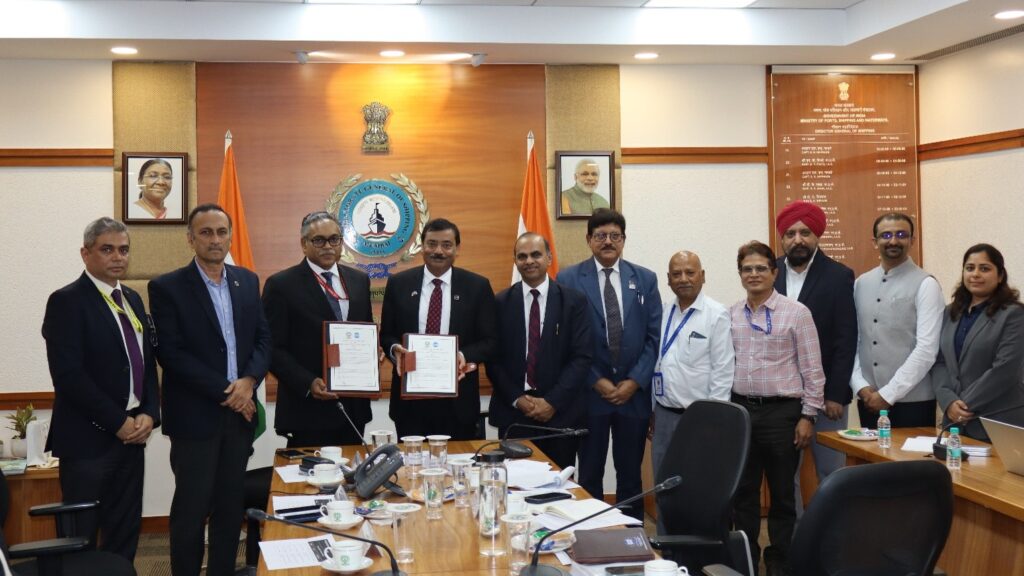
Engineers India Limited has entered into a strategic partnership with India’s Directorate General of Maritime Administration to provide engineering, project management and technical advisory support for the development and modernisation of the country’s maritime sector.
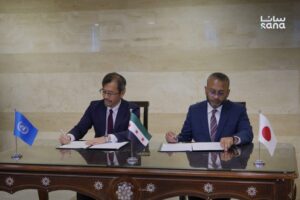
The Memorandum of Understanding was signed on 24 July 2026 and establishes a framework through which Engineers India Limited, known as EIL, will support the planning, development and implementation of maritime infrastructure and administration projects.
EIL is an engineering consultancy and engineering, procurement and construction company operating under India’s Ministry of Petroleum and Natural Gas. The Directorate General of Maritime Administration, formerly known as the Directorate General of Shipping, sits within the Ministry of Ports, Shipping and Waterways.
Under the agreement, EIL will provide multidisciplinary services covering engineering, project management, infrastructure planning, digital solutions, sustainability and specialist technical advice.
The partnership is intended to strengthen institutional capability within the maritime sector and support the Government of India’s wider ambitions to develop modern, efficient and internationally competitive maritime infrastructure.
Broad scope for technical cooperation
The MoU covers a potentially wide range of activities, including feasibility studies, infrastructure planning, technology integration, capacity enhancement and other specialised services identified by the two organisations.
EIL is expected to draw on its experience across hydrocarbons, marine engineering and offshore development to support DGMA-led projects.
This could include early-stage project definition, technical assessments, design support, delivery planning and the coordination of complex infrastructure programmes involving multiple public and private-sector stakeholders.
The inclusion of project management services is particularly significant, as maritime programmes frequently involve extensive interfaces between ports, shipping operators, regulatory authorities, logistics networks, energy infrastructure and coastal communities.
The agreement does not identify individual projects or investment values, but it creates a formal mechanism through which DGMA can access EIL’s technical and delivery expertise as programmes are developed.
Supporting maritime modernisation
India’s maritime system plays a central role in trade, industrial growth and supply-chain connectivity.
Improving the performance of ports, shipping services and supporting infrastructure is therefore closely linked to national economic competitiveness. Modernisation programmes must also respond to changing regulatory requirements, digitalisation, environmental expectations and the need for greater resilience.
The partnership is intended to support the adoption of modern technologies in maritime infrastructure and administration, while improving operational efficiency and sustainability.
Digital systems could play an increasingly important role in areas such as asset management, regulatory oversight, vessel monitoring, infrastructure planning and project controls.
EIL’s involvement may also help DGMA establish more consistent technical and delivery processes across future initiatives, particularly where projects require expertise spanning engineering, technology, environmental management and programme governance.
Institutional collaboration
The MoU reflects a broader trend towards greater cooperation between Indian public-sector organisations with complementary capabilities.
Rather than developing all technical expertise internally, government bodies are increasingly using formal partnerships to access specialist engineering, advisory and programme delivery resources.
For DGMA, the agreement provides access to an established engineering organisation with experience in managing large and technically demanding projects.
For EIL, it represents an opportunity to apply capabilities developed in the energy, offshore and industrial sectors to a wider maritime infrastructure portfolio.
The two organisations said the partnership would promote technical excellence and support the creation of a modern, resilient and sustainable maritime ecosystem.