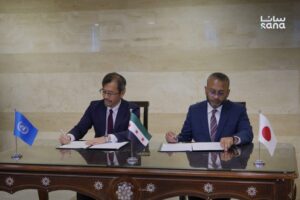


Timor-Leste has reached a major milestone in its energy transition after securing an US$85.7 million international financing package for the country’s first utility-scale solar and battery storage project, marking the nation’s first independently financed power generation scheme.
The landmark project, backed by the Asian Development Bank (ADB), World Bank Group, Japan International Cooperation Agency (JICA) and the Government of Canada, will significantly reduce the country’s dependence on imported diesel while strengthening energy security and supporting long-term economic development.
Once operational, the 73.7MW AC solar photovoltaic plant, supported by an 80.2MWh battery energy storage system, will generate enough electricity to meet the annual consumption of around 80,000 households, equivalent to approximately 400,000 people.
The project also represents Timor-Leste’s first Independent Power Producer (IPP) project, introducing private sector participation into the country’s electricity generation market.
A landmark renewable energy investment
The facility will be developed, constructed and operated by Manatuto Renewables Power under a 25-year Power Purchase Agreement (PPA) with state-owned utility Electricidade de Timor-Leste (EDTL, E.P.).
In addition to the solar farm and battery storage system, the programme includes transmission infrastructure and associated facilities required to connect the plant to the national electricity network.
The investment supports Timor-Leste’s National Strategic Development Plan, which targets generating 50% of the country’s electricity from renewable sources by 2030.
Paulo da Silva, Executive Commission President of EDTL, said the project would play a central role in achieving that ambition.
“This project is a milestone in Timor-Leste’s energy transition and a key step in delivering the vision set out in the National Strategic Development Plan 2011–2030, including the goal of meeting 50% of the country’s energy needs from renewable sources by 2030.
“It will reduce energy costs, strengthen energy security, and create a cleaner, more sustainable future for the people of Timor-Leste.”
Blended finance unlocks private investment
The financing package combines commercial and concessional funding from multiple international development institutions.
ADB is providing US$12.2 million in senior loans, alongside US$19 million from the International Finance Corporation (IFC) and US$12.2 million from JICA.
These are complemented by US$21.2 million from ADB’s Leading Asia’s Private Infrastructure Fund 2 (LEAP2), supported by JICA and Canada’s Climate and Nature Fund for the Private Sector in Asia, as well as a further US$21.2 million through the World Bank Group’s International Development Association (IDA) Private Sector Window and the IFC Concessional Capital Window.
The World Bank Group’s Multilateral Investment Guarantee Agency (MIGA) has also approved a 20-year political risk insurance guarantee covering the project sponsors, helping reduce investment risk and improve bankability.
ADB acted as transaction adviser to EDTL, overseeing project structuring and competitive procurement, with the contract awarded to EDF power solutions, part of the EDF Group, and I-Environment Investments Pacific Pty Ltd, a subsidiary of Japan’s ITOCHU Corporation.
The World Bank Group served as lead arranger for the financing package.
Michael Walsh, ADB Country Operations Head for Timor-Leste, said the project demonstrates that private renewable investment is achievable even in smaller and more fragile economies.
“By mobilizing concessional financing and showing that private sector investment in the utility-scale energy sector is feasible, this project builds investor confidence in renewables in the region.”
Project management perspective
Beyond its renewable energy credentials, the Manatuto project represents a textbook example of programme management across multiple international stakeholders.
The initiative combines complex technical delivery with sophisticated financial structuring, bringing together development banks, export finance institutions, government agencies, private developers, insurers and utility operators under a single delivery programme. Coordinating these workstreams requires robust governance, clearly defined responsibilities and disciplined interface management throughout procurement, financing, construction and long-term operations.
The project also illustrates the growing importance of blended finance in enabling infrastructure delivery. Combining concessional loans, commercial debt and political risk guarantees reduces investment risk sufficiently to attract private capital into markets that have traditionally struggled to secure large-scale infrastructure investment. Managing these financial structures is increasingly becoming a critical component of programme delivery alongside engineering and construction.
From a delivery perspective, integrating solar generation, battery storage, transmission infrastructure and long-term operational arrangements adds another layer of complexity. Project teams must coordinate civil works, electrical systems, grid integration, commissioning and operational readiness while ensuring contractual obligations under the 25-year power purchase agreement are met.
For project professionals, the programme highlights how successful energy transition projects increasingly depend on more than technical expertise. Delivering transformational infrastructure now requires integrated programme management capable of aligning engineering, finance, procurement, regulation and stakeholder engagement to create investable projects that deliver lasting economic, environmental and social benefits.