
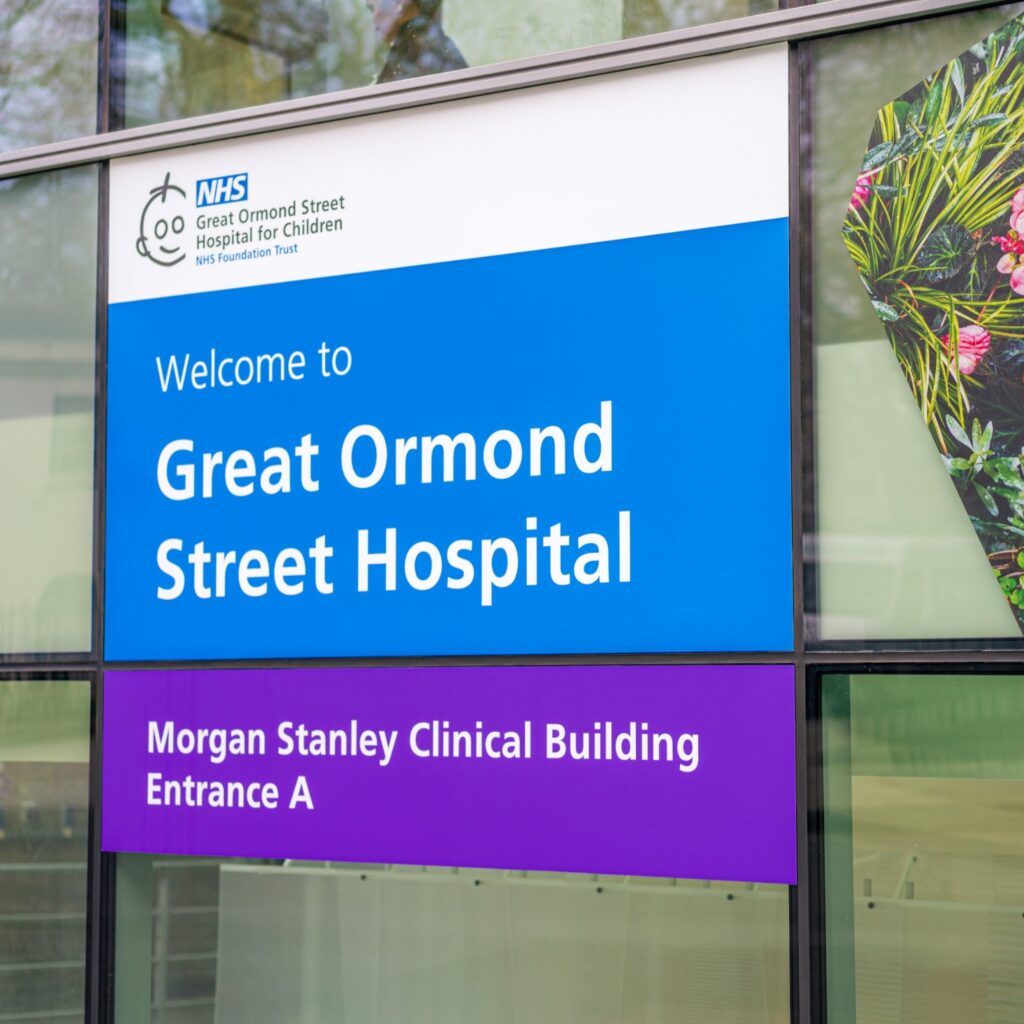
Great Ormond Street Hospital (GOSH) has launched a 15-month programme to develop and evaluate agentic artificial intelligence in hospital operations, working with technology provider Hyland and Amazon Web Services (AWS) to establish how autonomous AI tools can be deployed safely within the NHS.
Supported by NHS England funding, the ‘Agentic Hospital’ programme will follow a phased delivery approach, with AI tools tested alongside existing manual processes to assess operational performance, safety and governance.
The programme will run until the end of October 2027, with findings shared across the NHS and wider healthcare sector.
The initiative comes amid significant operational and financial pressures across the health service. According to the 2025 NHS Staff Survey, 31% of NHS staff reported feeling burnt out because of their work.
NHS and technology partners establish collaborative delivery model
GOSH has selected Hyland and AWS as technology and infrastructure collaborators, combining internal healthcare expertise with specialist capabilities in workflow automation, artificial intelligence and cloud computing.
Hyland will work with hospital teams to design and develop the agentic AI platform, while AWS will provide cloud computing credits and technical guidance.
The programme will use Hyland’s Content Innovation Cloud, hosted on AWS infrastructure, to enable AI agents to access information and complete tasks within defined workflows.
Amazon Bedrock will allow the project team to select different AI models according to individual operational requirements, while Hyland’s AI Control Tower will support oversight and auditing of agent activity.
Unlike generative AI tools that primarily produce content or summarise information, agentic AI can coordinate activities and undertake actions across workflows within established rules and safeguards.
The programme team is working with the Information Commissioner’s Office (ICO), with data management conducted in accordance with UK GDPR requirements.
Phased delivery approach prioritises governance and safety
The programme will initially focus on administrative processes, allowing the project team to develop governance frameworks and evaluate performance before considering more complex applications.
The first phase will concentrate on two operational use cases:
- Supplier reconciliation: AI agents will match supplier statements against invoices and identify discrepancies for staff review, potentially reducing manual processing and allowing finance teams to concentrate on resolving exceptions.
- Hospital policy management: AI tools will help staff locate relevant Trust policies and understand how they apply to specific tasks, using approved documentation to generate responses.
Each phase will conclude with a formal review assessing safety, accuracy, governance compliance and the technology’s ability to improve operational processes.
Decisions about subsequent phases will only be made once these assessments have been completed.
Later stages may explore activities associated with clinical workflows, including booking appointments or diagnostic tests following decisions made by clinicians.
However, the AI tools will not make clinical decisions, and human oversight will remain a requirement throughout the programme.
Programme aims to establish evidence for wider NHS adoption
A central objective is to establish whether agentic AI can deliver measurable operational benefits within a complex healthcare environment while maintaining appropriate governance and accountability.
Dr Shankar Sridharan, Chief Clinical Information Officer at GOSH and National Clinical Lead for Artificial Intelligence at NHS England, said successful implementation required more than demonstrating technical capability.
“However, the challenge is not simply making the technology work, but ensuring it can operate safely, reliably and at scale,” he said.
“By bringing together NHS and industry expertise, this programme aims to establish the governance, evidence of value and standards needed to realise the full potential of agentic AI across healthcare.”
For programme management professionals, the initiative provides an example of how emerging technology can be introduced through controlled experimentation, formal stage reviews and evidence-based decisions about expanding scope.
Running AI tools alongside existing processes will allow the hospital to assess performance before making decisions about longer-term implementation.
Jitesh S. Ghai, CEO, Hyland said: “This programme is not just about building more AI tools, we are creating a governed foundation that lets those tools actually be trusted with real work, across an entire institution, not just one department at a time. What we’re building with GOSH isn’t a single hospital’s AI project, but a blueprint that demonstrates how agentic AI can operate safely and transparently inside one of the most complex healthcare environments in the world – we call it the Agentic Hospital.”
Ash Thankey, Managing Director and General Manager, UK, Germany and International Organisations, Public Sector at Amazon Web Services, said: “We’re delighted to continue to support Great Ormond Street Hospital, a long-time pioneer of digital innovation, as it now explores what agentic AI can unlock for the NHS. Using secure, scalable AWS infrastructure and advanced agentic AI tools, GOSH’s teams can safely test new ways to lift the burden of routine administration to give staff more time for patients, research, and care. These cloud and AI foundations are built to scale, and what works here could go on to deliver impact right across the NHS.”