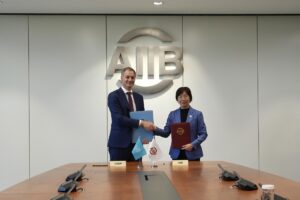

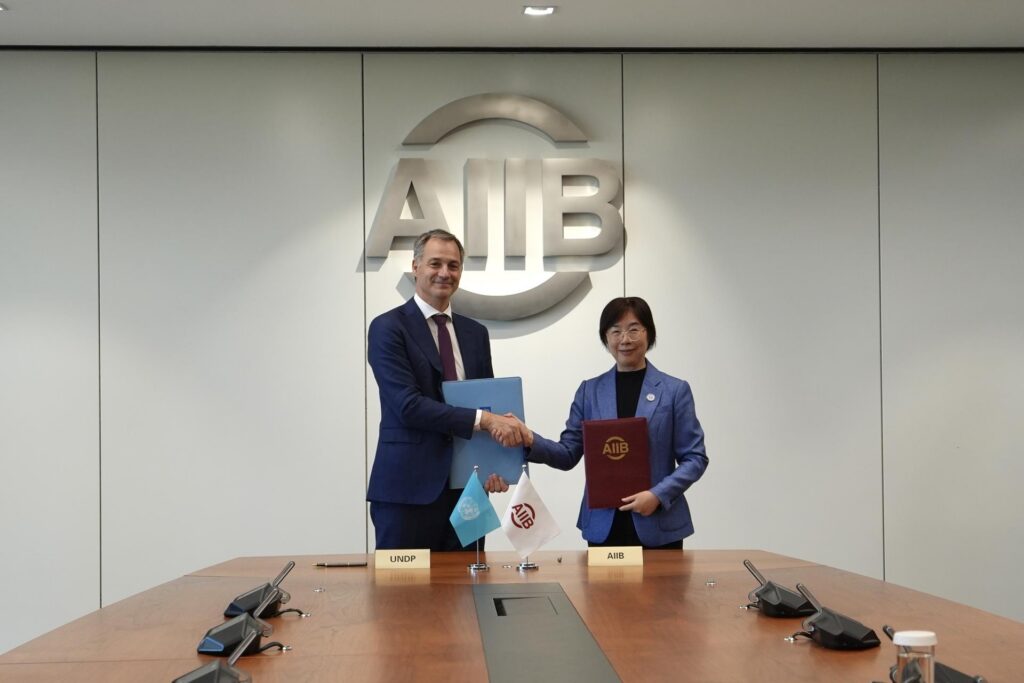
The Asian Infrastructure Investment Bank (AIIB) and United Nations Development Programme (UNDP) have renewed their partnership to help governments develop investment-ready infrastructure and climate projects, strengthen project preparation and mobilise financing for implementation.
The organisations have signed a new five-year Memorandum of Understanding (MoU), building on their original partnership established in 2023.
The agreement places greater emphasis on converting national development priorities into bankable projects, addressing a persistent challenge in infrastructure investment: securing financing for projects that have been identified as priorities but are not sufficiently developed to attract funding.
The partnership will combine UNDP’s country-level expertise in policy development and project preparation with AIIB’s infrastructure financing capabilities and financial instruments.
Project preparation becomes central to investment strategy
A key objective of the renewed agreement is to strengthen the early stages of infrastructure project development.
Many governments face difficulties moving from national infrastructure strategies to projects with the technical, financial and institutional arrangements necessary to secure investment.
The AIIB-UNDP partnership aims to address these challenges by supporting governments in identifying opportunities, preparing projects and developing financing structures.
Alexander De Croo, UNDP Administrator, said the gap between development priorities and investment-ready projects remained a major obstacle.
“Countries know what they need. The challenge is too often turning those priorities into investment-ready projects and connecting them with financing,” he said.
“By combining UNDP’s expertise on the ground with AIIB’s financing capacity, we can help close that gap and turn development priorities into tangible improvements in people’s lives.”
The renewed agreement will focus on sustainable infrastructure, climate and nature-related investments, policy support and coordination between governments and development partners.
Blended finance to support infrastructure investment
The partnership will also seek to mobilise grants, concessional resources and other financing to support project development and implementation.
These resources could be combined with AIIB financing and investment from other institutions through blended finance arrangements.
The approach is intended to help governments develop projects that may face difficulties attracting conventional commercial financing.
AIIB will contribute its experience in infrastructure investment and financial structuring, while UNDP will provide technical support and assistance with policy and institutional requirements.
Zou Jiayi, President and Chair of the Board of Directors of AIIB, said effective project preparation was fundamental to sustainable infrastructure investment.
“Sustainable infrastructure begins with strong projects that respond to countries’ priorities,” she said.
“By jointly mobilizing resources and leveraging complementary strengths, AIIB and UNDP can deliver innovative financing solutions and prepare high-impact infrastructure investments.”
The organisations have not disclosed a specific financing commitment or investment target under the renewed agreement.
Individual projects and financing arrangements will remain subject to the respective approval processes of AIIB and UNDP.
Five-year action plan to guide implementation
A joint action matrix will establish the framework for cooperation over the agreement’s five-year duration.
The organisations will work with participating governments and development partners to identify investment opportunities, develop project pipelines and mobilise resources.
The framework is intended to provide a more structured approach to collaboration, linking early-stage planning with financing and implementation.
For project and programme management professionals, this emphasis on preparation is particularly relevant to infrastructure developments requiring extensive feasibility assessments, stakeholder coordination, environmental considerations and financial planning.
The agreement also creates opportunities to connect AIIB financing with UNDP’s newly launched Investment Accelerator.
The accelerator supports governments in improving investment policies, developing investment-ready project pipelines and engaging potential investors.
Its activities are intended to help projects progress from initial preparation into implementation.
Partnership builds on Global Financing Playbook
The renewed MoU follows earlier collaboration between AIIB and UNDP, including the development of the Global Financing Playbook.
The framework provides guidance to governments on sequencing and combining different sources of development finance to support national priorities.
It is designed to help policymakers identify appropriate financing arrangements and improve the transition from development planning to investment.
The latest agreement builds on this work by placing greater emphasis on practical project preparation and resource mobilisation.
Rather than focusing solely on financing strategies, the partnership aims to strengthen the processes required to develop projects that can secure investment and proceed to delivery.
Development outcomes to form part of project assessment
Alongside infrastructure financing, the partnership will consider the wider economic and social impacts of proposed investments.
UNDP will contribute expertise in inclusive economic growth, employment, livelihoods and local development.
This is intended to help ensure that infrastructure projects support improvements in public services, economic opportunities and community outcomes.
The approach reflects the importance of linking project investment decisions with measurable development benefits.
For infrastructure project teams, it reinforces the need to consider outcomes beyond construction completion, including the long-term economic and social value generated by completed assets.
The renewed AIIB-UNDP partnership establishes a five-year framework for developing and financing sustainable infrastructure projects, although specific country allocations, project commitments and delivery milestones have not yet been announced.
Its effectiveness will depend on how successfully the organisations translate national development priorities into prepared, financed and implemented infrastructure investments.