
The University of Southampton has secured more than €9 million (£8 million) in European Research Council funding to deliver three five-year research projects spanning climate science, coral resilience and the use of artificial intelligence to reconstruct historic maritime trade.
The projects have received ERC Advanced Grants, which form part of the European Union’s Horizon Europe programme and support established researchers undertaking ambitious long-term research.
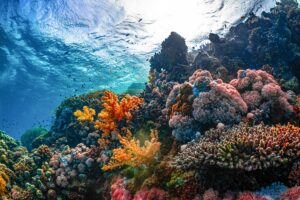
Two of the Southampton projects will investigate coral systems and their relationship with changing temperatures, while the third will combine historical research, artificial intelligence and geospatial analysis to examine European maritime trade between the 16th and 19th centuries.
Together, the awards create three substantial multidisciplinary research programmes requiring coordination across scientific facilities, digital technologies and international research networks.
€3.4m project to improve climate reconstruction
Professor Gavin Foster will receive €3.4 million (£3 million) for UNLOCK, a project examining how tropical coral skeletons record the environmental conditions experienced during their lifetime.
Researchers will measure the chemical and isotopic composition of the calcifying fluid that corals secrete when creating their skeletons.
The programme will require the development of new cryo-analytical techniques to enable those measurements.
Scientists currently use variations in coral skeleton composition to reconstruct historical environmental conditions, but biological processes within the coral can affect those records and make interpretation more difficult.
“These new observations will allow UNLOCK to deliver palaeoclimate reconstructions over centuries and millennia with unprecedented accuracy, improving our understanding of the preindustrial climate and the scale of anthropogenic climate change,” said Foster.
€3.3m awarded for coral resilience research
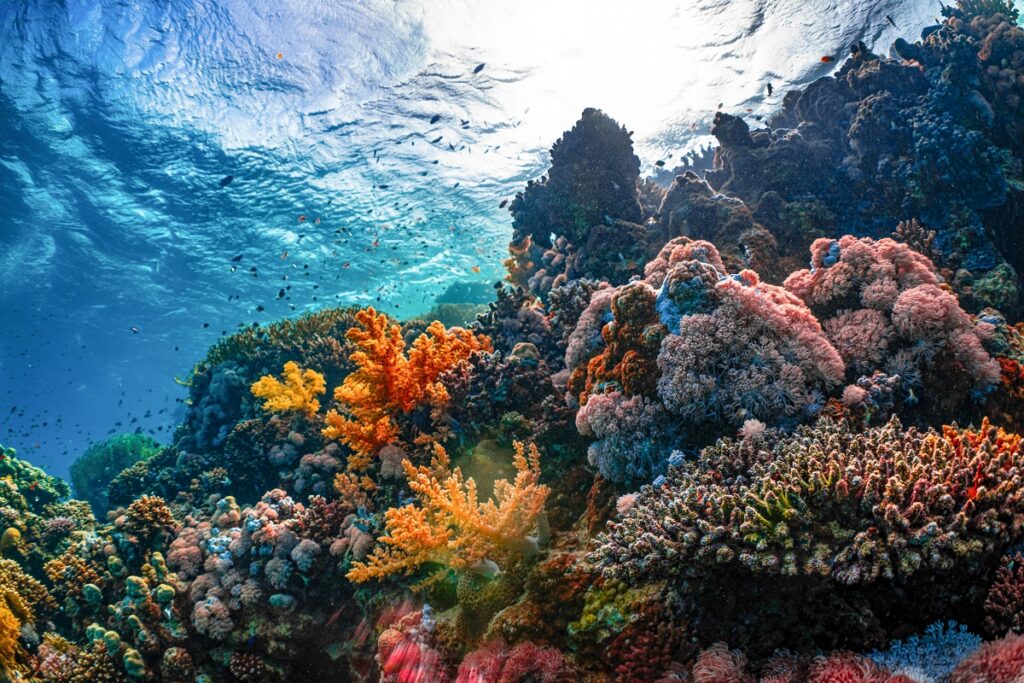
A second five-year programme will investigate why some corals are better able to survive different temperature environments.
Professor Jörg Wiedenmann, head of Southampton’s Coral Reef Laboratory, has secured €3.3 million (£2.9 million) for the Symbiolink project.
Researchers will study the relationship between corals and the microscopic organisms living within them, examining connections with coral health, nutrition and resistance to heat stress.
The project will investigate why reefs can exist across substantially different ocean temperatures, with the findings intended to improve understanding of the conditions that could support reef survival as oceans warm.
“Coral reefs around the world are under increasing pressure from rising ocean temperatures, causing widespread coral bleaching and threatening ecosystems,” said Wiedenmann.
“We know some corals are more resilient to heat than others, but the biological processes influencing this are still not well understood. Our research will help inform future conservation efforts to protect reef ecosystems.”
AI project to reconstruct European maritime networks
Professor Craig Lambert has secured a further €2.8 million (£2.4 million) for an international research programme examining the role maritime trade played in connecting Europe and shaping its development.
The Uncharted Maritime Worlds project will bring together historians with electronics, computer science and geospatial specialists.
Researchers will seek to reconstruct networks of ships, ports, merchants, commodities and communities operating across Europe between the 16th and 19th centuries.
Artificial intelligence will play a central role in processing and connecting millions of historical records held across fragmented European archives.
“For generations, historians have been constrained by the fragmented nature of surviving evidence,” said Lambert. “Advances in Artificial Intelligence now allow us to combine millions of records from archives across Europe and ask entirely new questions about how people, goods, and ideas moved across the continent.”
The programme will involve Southampton historian Dr John McAleer, Professor Stuart Middleton from electronics and computer science and members of the university’s GeoData Institute.
Professor Mark Spearing, University of Southampton Vice-President for Research and Enterprise, said securing three ERC Advanced Grants in the same funding round demonstrated the breadth of research being undertaken at the institution.
“ERC Advanced Grants are highly coveted by academics throughout Europe and the process is extremely competitive,” he said. “Receiving funding for three in one round is a tremendous achievement and demonstrates the quality and depth of research at our university.”