
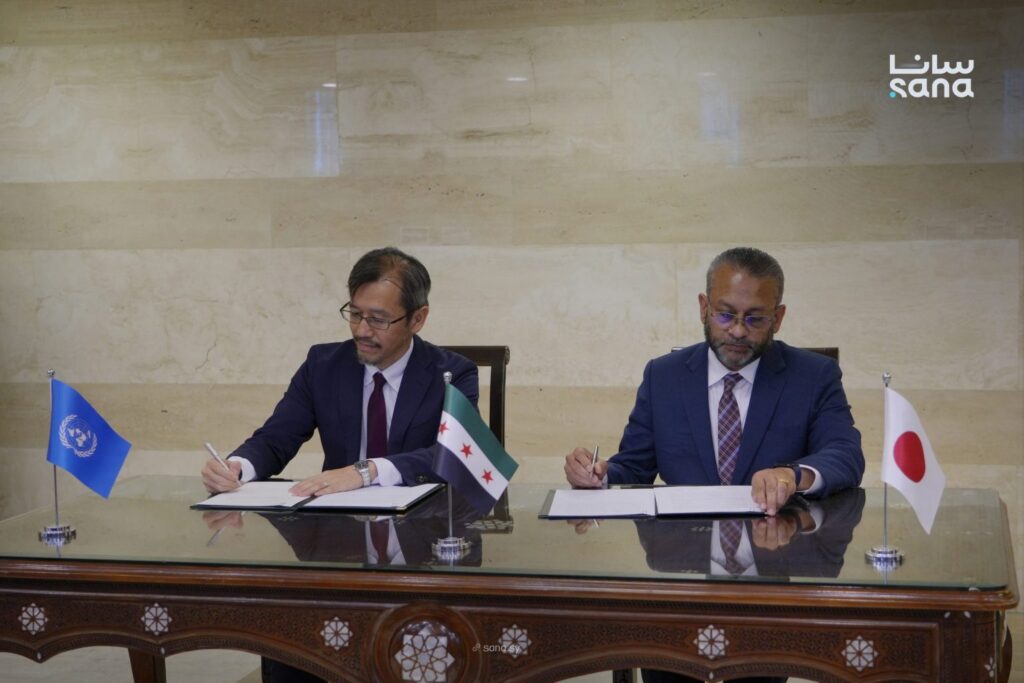
Japan and UN-Habitat have launched a US$9.5 million urban reconstruction programme in Homs, combining public space regeneration with modern waste management infrastructure in a project that demonstrates how integrated delivery can accelerate post-conflict recovery while strengthening long-term urban resilience.
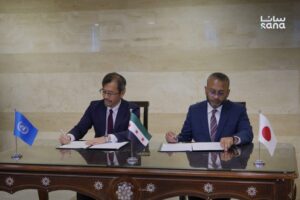
The agreement, signed by the Government of Japan and the United Nations Human Settlements Programme (UN-Habitat) under the patronage of Syria’s Ministry of Foreign Affairs and Expatriates, will support the rehabilitation of key civic infrastructure alongside improvements to municipal services.
The programme focuses on restoring Homs’ Old Clock Square as a vibrant economic and social centre while upgrading the city’s solid waste management system through modern infrastructure and operational improvements.
Combining infrastructure with institutional capacity
Rather than concentrating on physical reconstruction alone, the initiative adopts an integrated approach that links urban regeneration with municipal capability building.
Alongside the restoration of the historic public square, the project includes:
- Rehabilitation and reorganisation of surrounding markets
- Upgrades to Homs’ solid waste management system
- Rehabilitation of the city’s main landfill using Japan’s Fukuoka semi-aerobic landfill method
- Provision of waste collection, transport and maintenance equipment
- Strengthening municipal capability in public communication and service management
The combination of infrastructure investment and institutional development reflects a growing recognition that long-term urban recovery depends as much on effective local governance as it does on rebuilding physical assets.
Sustainable waste management at the heart of recovery
A central component of the programme is the rehabilitation of Homs’ primary landfill using the Fukuoka method, an internationally recognised semi-aerobic landfill system developed in Japan.
The approach improves landfill performance by enhancing natural airflow, accelerating waste stabilisation, reducing environmental impacts and lowering operational costs compared with conventional landfill techniques.
By combining improved landfill infrastructure with new waste collection equipment, the project aims to strengthen the city’s overall waste management capability while supporting healthier urban environments.
Rebuilding cities through integrated programmes
The restoration of Old Clock Square is intended to revive one of Homs’ principal civic and commercial spaces, helping stimulate local economic activity while improving public amenities.
Projects of this nature require coordination across multiple workstreams, including urban planning, civil engineering, environmental management, municipal operations and stakeholder engagement.
Delivering these elements as a single integrated programme allows physical improvements and service enhancements to reinforce one another rather than being delivered as isolated interventions.
Analysis
The Homs programme illustrates how urban reconstruction is evolving beyond rebuilding damaged infrastructure towards creating more resilient and sustainable cities.
Historically, post-conflict recovery often prioritised repairing roads and buildings before addressing wider service delivery challenges. Increasingly, development organisations are adopting integrated approaches that combine infrastructure investment with governance reform, environmental management and institutional capacity building.
For project professionals, this significantly increases programme complexity. Success depends not only on delivering construction works but also on coordinating multiple stakeholders, strengthening local capability and ensuring infrastructure can be operated and maintained long after project completion.
The inclusion of advanced waste management techniques also highlights the growing role of sustainability within reconstruction programmes. Rather than simply replacing damaged assets, projects are increasingly expected to improve environmental performance and resilience while supporting economic recovery.
As cities affected by conflict and climate pressures seek to rebuild, integrated programmes such as the Homs initiative demonstrate how effective project delivery can create lasting social, environmental and economic value alongside physical reconstruction.