
Pacific nations are taking a major step towards improving water security and climate resilience by developing the region’s first Regional Hydrology Strategy, creating a shared framework to strengthen water monitoring, forecasting and resource management across some of the world’s most climate-vulnerable countries.
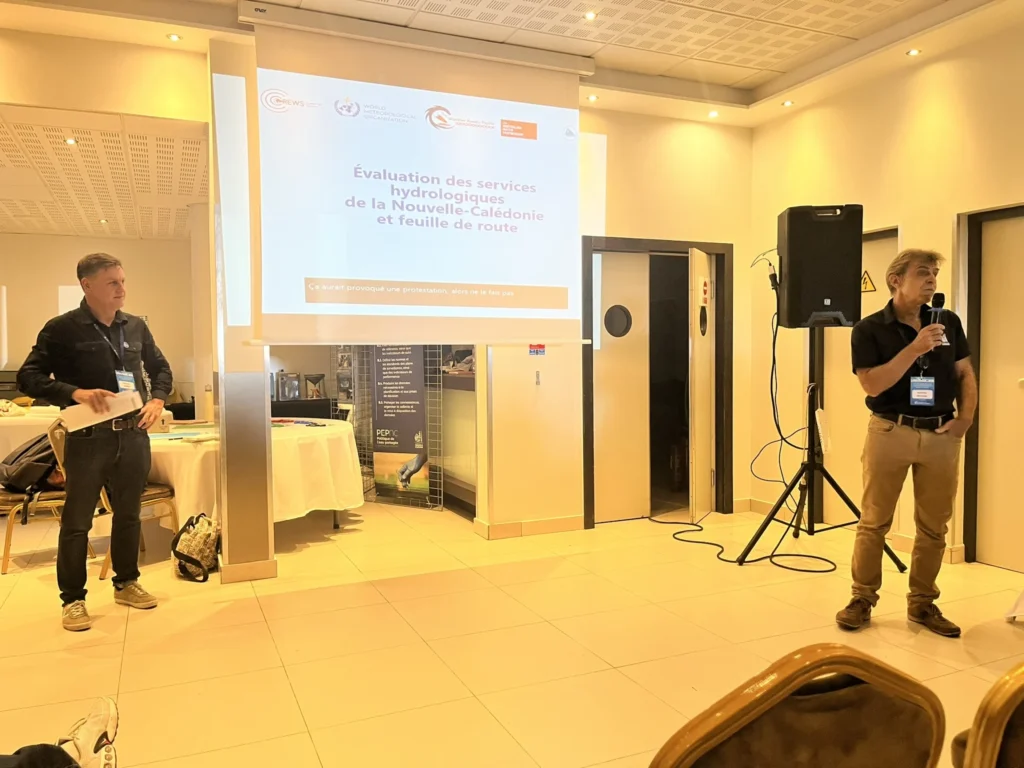
Government agencies, technical specialists and water practitioners from 16 Pacific Island countries and territories met in Noumea, New Caledonia, on 24 July to help shape the strategy, which aims to improve hydrological services and provide governments with better scientific information to support decision-making.
The initiative reflects growing recognition that effective water management has become a strategic priority as climate change alters rainfall patterns, intensifies flooding and droughts, and places increasing pressure on freshwater resources across the Pacific.
Hydrology, the science of monitoring and understanding the movement, distribution and quality of water, has traditionally received less attention than meteorology in many parts of the world. Yet for project professionals delivering infrastructure, water supply, flood protection and climate adaptation programmes, reliable hydrological data is becoming increasingly important.
Better understanding of river flows, groundwater resources and rainfall variability underpins investment decisions ranging from dams and reservoirs to transport infrastructure, agriculture and urban development. Without robust hydrological information, projects face greater uncertainty around design standards, operational resilience and long-term sustainability.
The proposed Regional Hydrology Strategy seeks to strengthen these capabilities by improving cooperation between Pacific nations, enhancing technical expertise and creating more consistent approaches to collecting and sharing hydrological data.
The strategy also supports broader efforts to improve disaster preparedness. Pacific Island nations are among the regions most exposed to climate-related hazards, with floods, prolonged droughts and changing rainfall patterns posing growing risks to communities, infrastructure and economic development.
For project managers working on climate resilience programmes, stronger hydrological services can significantly improve project planning and risk management. Reliable data enables more accurate flood modelling, better infrastructure design, stronger business cases for investment and improved emergency planning throughout a project’s lifecycle.
The regional approach also reflects an increasingly common trend in international development, where countries collaborate to build technical capability that would be difficult or costly to develop individually. Shared standards, common datasets and coordinated scientific expertise can improve decision-making while reducing duplication of effort.
As climate adaptation investment accelerates across the Pacific, the strategy could become an important enabling framework for future infrastructure and water resource programmes. Development banks and international funding organisations increasingly require robust climate and hydrological evidence before approving major investments, making stronger regional capability valuable beyond environmental management alone.
Ultimately, the strategy recognises that effective project delivery begins with reliable evidence. Whether designing flood defences, securing drinking water supplies or planning resilient transport networks, understanding how water systems behave will become an increasingly critical capability for governments and project professionals across the Pacific.