
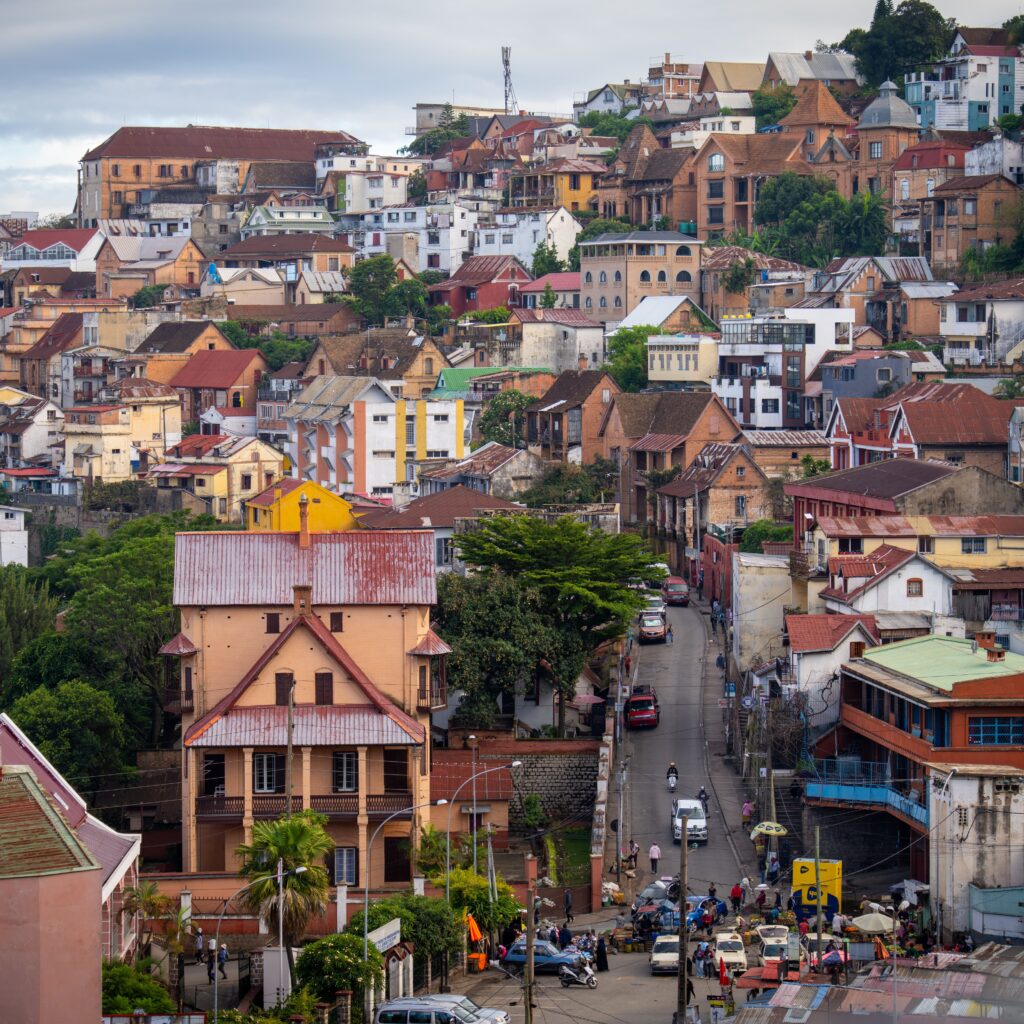
Madagascar is set to strengthen climate resilience, modernise urban infrastructure and create thousands of jobs following approval of a US$225 million programme targeting the country’s two largest urban centres.
The Integrated Urban Development and Resilience Project for Jobs (PRODUIRE2) will support long-term resilience and economic development across Greater Antananarivo and Greater Toamasina, combining flood protection, neighbourhood regeneration, resilient housing, land administration reform and public infrastructure upgrades.
The programme comes as Madagascar continues to face mounting climate risks. Cyclones Fytia and Gezani, which struck in early 2026, caused damage equivalent to 3.4% of the country’s GDP, highlighting the growing need for resilient urban infrastructure.
By 2032, the programme aims to deliver climate-resilient infrastructure benefiting 1.5 million people, rebuild 20,000 homes to higher resilience standards, issue land documentation for 50,000 properties, and generate around 17,000 jobs.
Building resilience while supporting economic growth
In Greater Antananarivo, investments will expand an existing urban resilience programme through major works including flood protection, drainage improvements, solid waste management, neighbourhood upgrading and modernisation of land administration systems.
The capital, which generates around 44% of Madagascar’s GDP, continues to face severe urban challenges, with extreme poverty more than doubling over the past decade despite its economic importance.
Meanwhile, Greater Toamasina, where Cyclone Gezani damaged around 70% of the housing stock, will focus on rebuilding resilient housing alongside the rehabilitation of schools, healthcare facilities and other critical public infrastructure.
Among the major reconstruction projects is the complete rebuilding of the University of Barikadimy, which suffered extensive storm damage.
Madagascar’s Minister of Economy and Finance, Dr Herinjatovo Ramiarison, said the programme is designed to improve both living conditions and economic opportunity.
“When cities work better, people live better. Families will benefit from safer neighborhoods, better infrastructure, improved access to land services, and greater economic opportunities. This investment will help create jobs, support local businesses, and give more people the chance to build a brighter future for their families.”
Land reform supports future investment
Alongside physical infrastructure, the programme also addresses one of the country’s longstanding barriers to urban development: insecure land tenure.
Nearly half of land parcels in Antananarivo lack formal ownership documentation, limiting investment and constraining economic activity.
PRODUIRE2 will introduce digital land administration systems and support land regularisation, with a target of issuing documentation for 50,000 parcels. At least 40% of newly issued land documents are expected to include women as sole or joint rights holders.
According to World Bank Country Manager Atou Seck, the programme is intended to improve both resilience and long-term economic prospects.
“At its heart, this project is about helping people live more safely, creating better economic opportunities, and enabling families to focus on what matters most: their children’s future, their work, and their well-being.”
Project management perspective
PRODUIRE2 illustrates the growing shift towards integrated programme delivery, where climate resilience, urban regeneration and economic development are managed through a single coordinated investment programme rather than a collection of standalone projects.
Successfully delivering multiple workstreams across two rapidly expanding cities will require strong programme governance, coordinated stakeholder management and disciplined benefits realisation. Flood defence schemes, housing reconstruction, public facility upgrades and land administration reforms all have different delivery timelines, procurement requirements and stakeholder groups, making integration a critical success factor.
The programme also demonstrates how resilience projects are increasingly expected to deliver broader socioeconomic outcomes. Rather than focusing solely on infrastructure replacement following extreme weather events, the initiative links physical asset delivery with employment, housing, land reform and investment attraction, creating multiple measures of success beyond construction completion.
For project leaders, the programme highlights the importance of managing complex portfolios where infrastructure, institutional reform and community outcomes must progress together. As climate adaptation becomes a central priority for governments worldwide, programmes of this scale are likely to become increasingly common, placing greater emphasis on programme management capability as a driver of long-term resilience and sustainable growth.