

Rocketlane has secured a strategic investment from Atlassian Ventures, strengthening its position in the fast-growing market for AI-powered professional services delivery and signalling increasing confidence in agentic AI as the next evolution of project execution.
The investment follows a year of rapid growth for Rocketlane, which recently completed a $60 million Series C funding round, taking total capital raised to $105 million, while more than doubling its revenue and expanding its customer base to more than 750 organisations, including 20 companies on the Forbes Cloud 100 list.
Perhaps most notably, Atlassian is not only investing in Rocketlane but is also using the platform internally to support its own AI-enabled professional services operations.
Georgia Zhang, Head of Atlassian Ventures, said the company’s internal experience with Rocketlane played a significant role in the investment decision.
“We’re seeing AI create meaningful opportunities for disruption across industries. Rocketlane’s thoughtful approach to launching AI agent-led experiences for implementation services and consulting teams is exciting. Seeing our own services team at Atlassian choose Rocketlane was compelling proof of their momentum and the strength of their product in the category.”
AI moves beyond project tracking
At the centre of Rocketlane’s strategy is Nitro, which the company describes as the industry’s first agentic execution platform built specifically for professional services teams.
Unlike traditional project management software that primarily monitors progress and records activity, Nitro is designed to execute repeatable delivery tasks using AI agents while continuously monitoring project health and automating administrative work.
According to Rocketlane, the platform can support three key areas of project delivery:
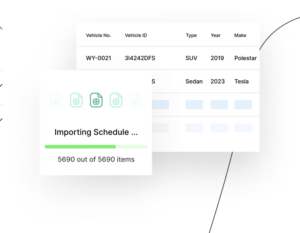
- Execution, by automating repeatable implementation activities such as system configurations, migrations and documentation.
- Project governance, by analysing project data, emails and meetings to identify emerging risks and customer issues before they escalate.
- Operational administration, through AI-driven management of timesheets, utilisation reporting and compliance activities.
The company says early deployments have demonstrated the potential to reduce delivery effort by as much as 50% for suitable implementation activities.
Chief Executive Officer and Co-founder Srikrishnan Ganesan believes AI represents a fundamental shift in how professional services organisations will operate.
“AI isn’t just changing how PS teams do their work. It’s challenging every assumption about what that work should look like in the first place. How you scope a project, how you price it, how you draw the line between human judgment and agent execution… these are all open questions now.”
He added that organisations attempting to simply overlay AI onto existing delivery models risk missing the larger opportunity to redesign project execution.
Project management perspective
The investment highlights a broader transition underway across project-based industries, where AI is beginning to move beyond productivity assistance into active project execution.
For years, project management platforms have focused on improving visibility through dashboards, reporting and collaboration tools. The next generation of AI platforms is instead attempting to automate elements of delivery itself.
That represents a significant evolution for professional services organisations, where project managers often spend substantial time coordinating activities, monitoring progress, updating schedules and producing status reports rather than focusing on stakeholder engagement and strategic decision-making.
If AI agents can reliably execute routine implementation activities while monitoring project health and highlighting emerging risks, project managers may increasingly shift towards governance, client relationships and managing exceptions rather than day-to-day administration.
However, widespread adoption will depend on trust, governance and clear accountability. While automating repeatable tasks may improve productivity, organisations will still need robust oversight to ensure AI-generated decisions remain transparent, auditable and aligned with contractual and regulatory requirements.
Atlassian’s decision to both invest in and deploy Rocketlane internally provides an important endorsement of that direction. It also reflects a wider trend across enterprise software, where vendors are increasingly becoming early adopters of the AI-powered delivery platforms they bring to market.