
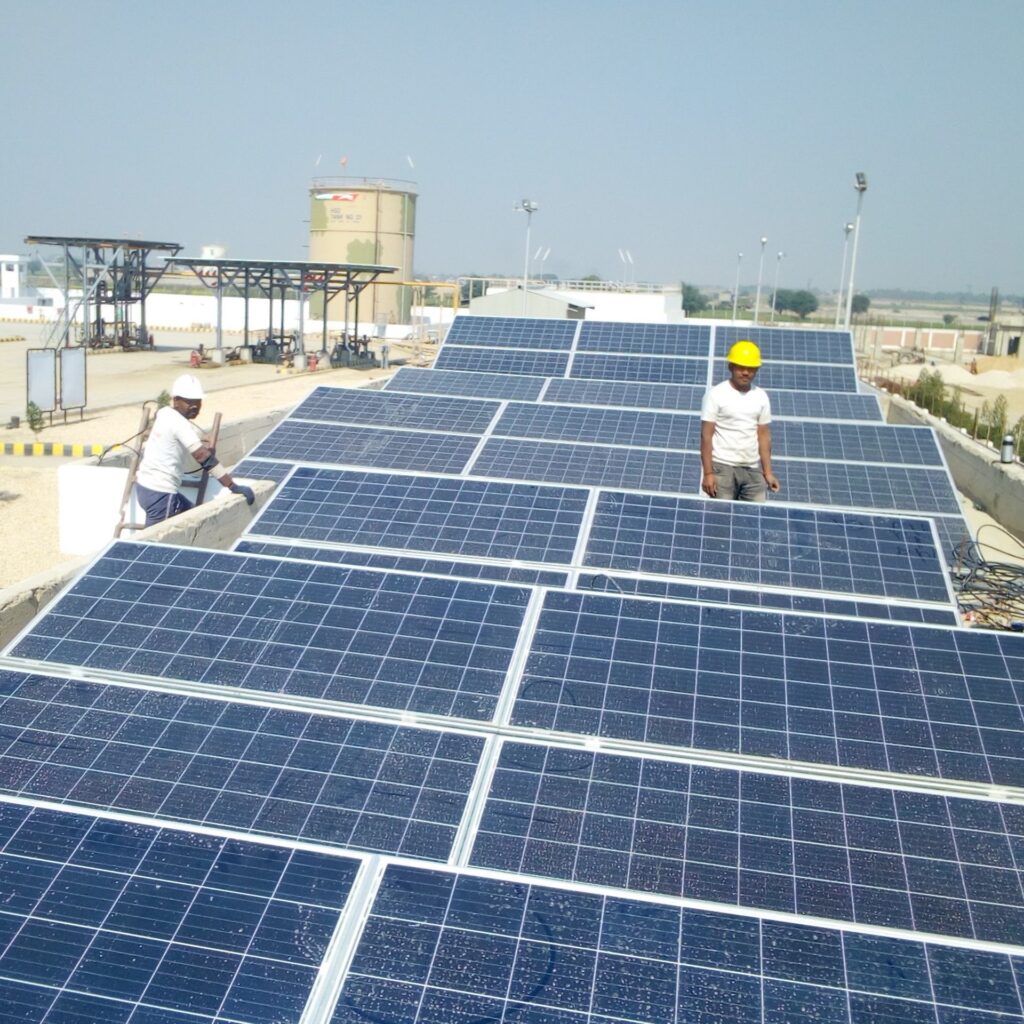
India is set to accelerate the rollout of residential rooftop solar under a major financing package designed to expand clean energy access, reduce household electricity costs and support the creation of an estimated 1.7 million jobs across the renewable energy sector.
The World Bank has approved US$890 million in financing to support the Government of India’s PM Surya Ghar: Muft Bijli Yojana programme, which aims to install rooftop solar systems on 10 million urban and rural homes.
The initiative forms part of India’s wider energy transition strategy, which includes achieving net zero emissions by 2070 and increasing non-fossil fuel electricity generation to 60% of the country’s energy mix by 2035.
While India has rapidly expanded utility-scale solar generation over the past decade, residential rooftop deployment has lagged behind. The national programme seeks to address that gap by encouraging household adoption while stimulating domestic manufacturing and expanding the country’s solar installation workforce.
Paul Proccee, Acting Country Director for India at the World Bank, said the organisation has supported India’s rooftop solar market for more than ten years.
“The World Bank has been supporting India’s solar rooftop sector for over a decade, mobilizing more than $2 billion to catalyze market growth from 500 MW to over 27 GW of installed capacity. This new financing will help India scale up residential solar, while creating job opportunities across the supply chain and installation ecosystem.”
Financing designed to unlock private investment
The financing package combines an US$820 million loan from the International Bank for Reconstruction and Development (IBRD), a US$60 million concessional loan from the Clean Technology Fund and a US$10 million grant from the Livable Planet Fund.
Alongside the public financing, the programme is expected to mobilise around US$4.2 billion in private sector lending, providing households with access to commercial finance for rooftop solar installations.
The programme also aims to strengthen the capabilities of electricity distribution companies, financial institutions and equipment suppliers, creating an integrated delivery ecosystem capable of supporting large-scale residential deployment.
According to Task Team Leader Moez Cherif, reducing financial barriers will be central to the programme’s success.
“The program will transform the residential solar market by removing financial barriers and building the capacity of distribution companies, banks, and vendors to deliver integrated service solutions. Through collateral-free financing, households can install solar power and significantly reduce their monthly electricity bills.”
Delivering rooftop solar to 10 million households represents one of the largest distributed infrastructure programmes currently underway anywhere in the world and highlights the increasing importance of programme management in delivering national energy transitions.
Unlike utility-scale renewable projects, residential solar deployment requires the coordination of millions of individual installations across diverse urban and rural locations. Success depends on integrating financing, procurement, logistics, workforce development, utility coordination and customer engagement into a single delivery framework.
The programme also illustrates how major infrastructure initiatives are increasingly being designed to achieve multiple objectives simultaneously. Alongside expanding renewable generation, the initiative aims to stimulate domestic manufacturing, strengthen financial markets, develop installer capability and create employment across the wider clean energy supply chain.
Managing benefits at this scale will require robust governance, digital monitoring and consistent delivery standards across thousands of contractors and financial institutions. Ensuring quality assurance while maintaining installation pace will be critical to achieving both energy generation targets and long-term system reliability.