
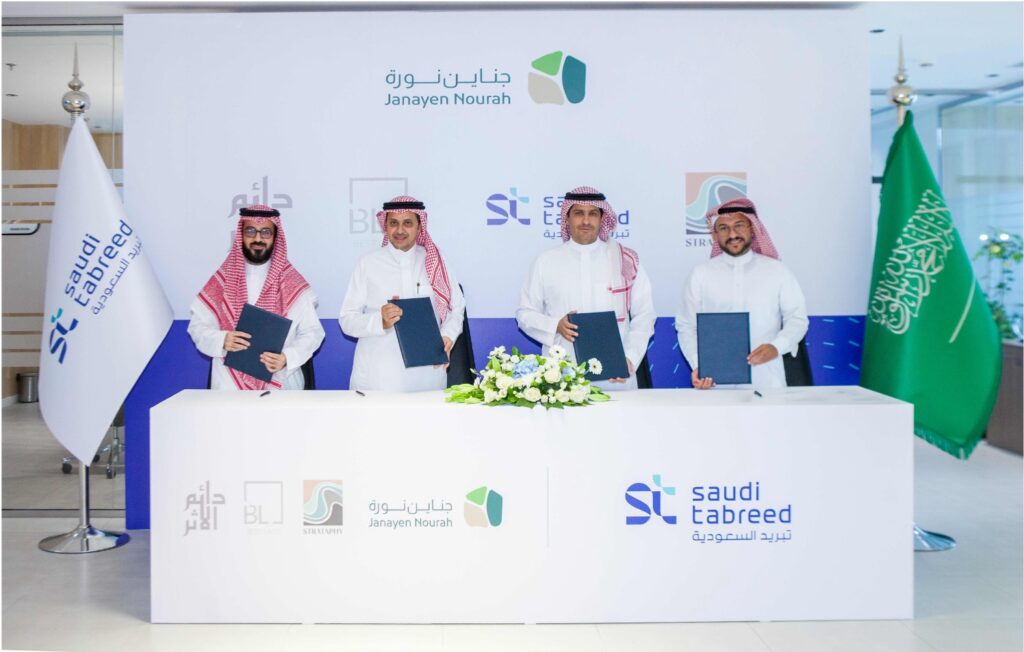
A major mixed-use development in Riyadh is set to become home to what is being described as the world’s first open-space geothermal district cooling system, following the signing of a binding Memorandum of Understanding between four organisations to deliver the innovative infrastructure.
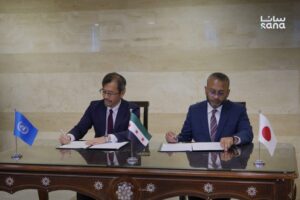
The agreement brings together Best Land for Real Estate and Investment LLC and Daim Al Athar for Real Estate Co., representing the Jnayin Nourah Project consortium, alongside Saudi District Cooling Company (Saudi Tabreed) and geothermal technology specialist Strataphy.
The partners will develop a district cooling network at the Jnayin Nourah Project, located within the Princess Nourah bint Abdulrahman University campus in Riyadh, using Strataphy’s patented PrimeLoop geothermal technology.
The system is designed to provide approximately 10,000 refrigeration tonnes (around 35MW thermal) of cooling capacity, using shallow geothermal energy to cool both buildings and outdoor public spaces.
Unlike conventional district cooling systems that rely on cooling towers and significant water consumption, PrimeLoop rejects heat into the ground rather than the atmosphere. According to the developers, the approach eliminates water consumption for heat rejection while reducing electricity demand for cooling by up to 50%.
The technology also takes advantage of the relatively stable underground temperature to provide consistent cooling performance regardless of the extreme ambient temperatures experienced across Saudi Arabia.
Ammar Alali, Chief Executive Officer of Strataphy, described the project as a milestone for the cooling sector.
“This is a landmark moment, not just for the Jnayin Nourah Project, but for the global cooling industry. With PrimeLoop, we have made shallow geothermal viable for district cooling at scale, and we are deploying it here as the first open-space cooling application of its kind anywhere in the world.”
He added that the technology offers both environmental and operational benefits by eliminating water consumption while significantly reducing electricity demand.
Saudi Tabreed will act as the district cooling infrastructure developer, providing a turnkey cooling solution for the development.
Managing Director Suliman Al Khliwi said the project demonstrates how district cooling continues to evolve to support Saudi Arabia’s sustainability ambitions.
“At Saudi Tabreed, we believe the future of cooling lies in smarter, more sustainable infrastructure. We are proud to bring our turnkey expertise to the Jnayin Nourah Project and to collaborate on a solution that pushes the boundaries of what district cooling can achieve.”
The Jnayin Nourah development partners said sustainability had been embedded into the project from the earliest planning stages.
Ashraf Saleh Bawazir, Chief Executive Officer of Best Land for Real Estate and Investment LLC, said the project aims to establish a new benchmark for sustainable urban development by integrating advanced infrastructure technologies.
Meanwhile, Daim Al Athar CEO Rakan Khaled Al Khalaf said the collaboration supports the vision of creating one of the region’s most advanced mixed-use developments while delivering long-term environmental and economic value.
Project management perspective
While the technology itself is attracting attention, the project also highlights the growing importance of early-stage integration between developers, infrastructure providers and specialist technology companies on complex urban developments.
Delivering a first-of-its-kind energy system requires far more than engineering innovation. It demands coordinated programme management across design, planning approvals, utilities integration, construction sequencing and long-term operations. Establishing responsibilities early through a binding framework agreement helps reduce interface risks before detailed engineering begins.
The project also illustrates how sustainability objectives are increasingly shaping project delivery decisions from the outset rather than being retrofitted later in the lifecycle. By integrating geothermal infrastructure into the masterplan from the earliest stages, the development team has the opportunity to optimise the wider design around the energy system, rather than treating cooling as a standalone utility.
If successfully delivered, the scheme could provide an important reference project for large-scale developments across hot-climate regions, demonstrating how innovative delivery models and integrated project management can help translate emerging technologies into commercially viable infrastructure.