
The Brazilian state of Santa Catarina is set to strengthen its resilience against increasingly severe flooding through a US$119.2 million programme that will combine major flood mitigation infrastructure with improved disaster management and climate adaptation.
Supported by financing from the World Bank Group, the initiative will benefit approximately 420,000 people across 54 municipalities, focusing particularly on communities and businesses located in high-risk flood zones within the economically significant Itajaí Valley.
The programme forms part of Santa Catarina’s wider “Proteção Levada a Sério” (Protection Taken Seriously) strategy, a US$1 billion long-term investment programme aimed at reducing climate-related risks while protecting the state’s economy, infrastructure and workforce.
Protecting a Critical Economic Hub
Santa Catarina is one of Brazil’s strongest regional economies, with advanced manufacturing, technology and agribusiness sectors driving employment and exports.
At the centre of this activity is the Itajaí Valley, which generates around one-third of all jobs in the state and is home to the Port of Itajaí, Brazil’s second-largest container port.
However, the same region is also one of the country’s most flood-prone areas.
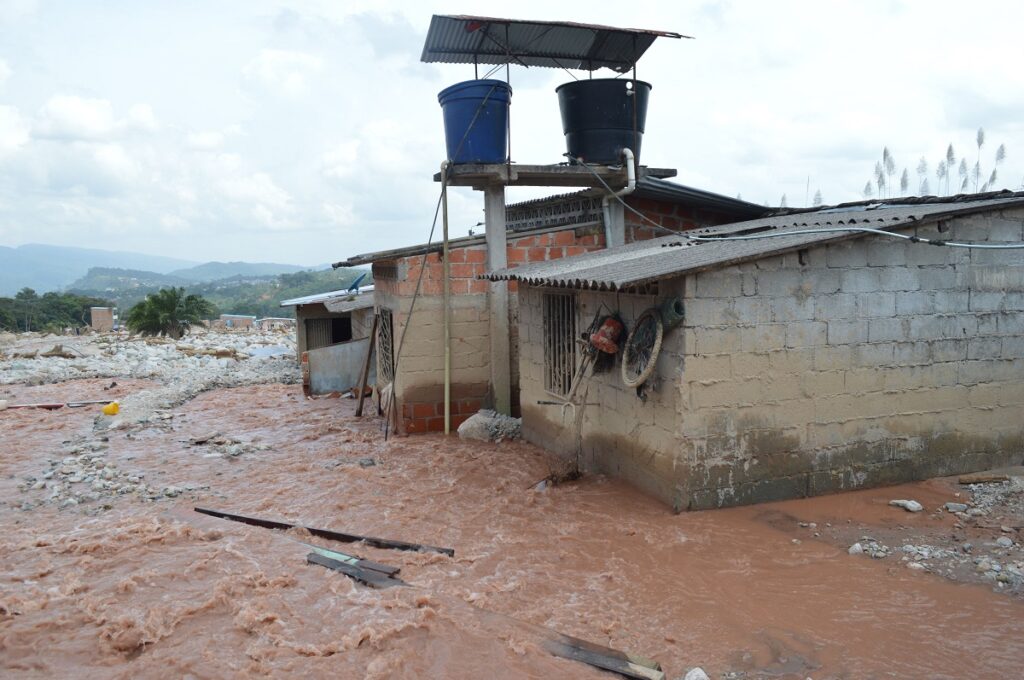
Between 1991 and 2023, floods and landslides caused more than US$7.2 billion in economic losses across Santa Catarina, affecting over 20 million people.
The devastating floods of 2008 highlighted the scale of the challenge, leaving around 90% of Itajaí underwater and forcing shipping operations to relocate for months, resulting in estimated losses of US$35 million per day in port revenue.
Jorge Coarasa, Acting World Bank Country Director for Brazil, said protecting the region’s economy depends on reducing climate risk.
“Continued job generation and local prosperity in the region will depend on sustainable strategies to adapt to growing flood risks.”
Delivering Complex Infrastructure
The programme includes a range of major civil engineering projects designed to reduce flood risk across the basin.
Planned works include:
- River channel improvements and dredging.
- Reinforcement of flood embankments.
- Installation of new floodgates along the Itajaí-Mirim River.
- Construction of additional upstream flood control dams as part of a wider state investment programme.
Alongside physical infrastructure, the project will expand early warning systems across Santa Catarina, improving coordination between meteorological services and civil defence agencies to support faster emergency responses during extreme weather events.
The programme will also introduce nature-based flood management approaches alongside traditional engineering solutions, reflecting the growing emphasis on combining grey and green infrastructure within climate adaptation projects.
Programme Management at Scale
For project professionals, the initiative illustrates the increasingly integrated nature of climate resilience programmes.
Rather than delivering isolated infrastructure schemes, the programme combines engineering works, environmental planning, emergency management, digital monitoring systems and institutional capacity building within a single coordinated portfolio.
Managing such programmes requires strong governance across multiple public agencies, technical disciplines and local authorities, while balancing long-term resilience objectives with immediate delivery milestones.
The project also demonstrates how infrastructure investment is increasingly being evaluated not only by its engineering outputs but by its ability to protect economic productivity, employment and critical supply chains.
A Model for Future Climate Adaptation
State officials intend for the programme to serve as a blueprint for future flood resilience investments across Brazil and Latin America.
By combining structural flood defences with improved forecasting, institutional coordination and nature-based solutions, the programme seeks to create a more comprehensive model for managing climate-related infrastructure risks.
For project leaders, the initiative highlights the growing importance of programme management in delivering climate resilience. Success will depend not simply on completing infrastructure on time and within budget, but on coordinating multiple interventions that together strengthen communities, protect critical economic assets and improve long-term resilience against increasingly frequent extreme weather events.