
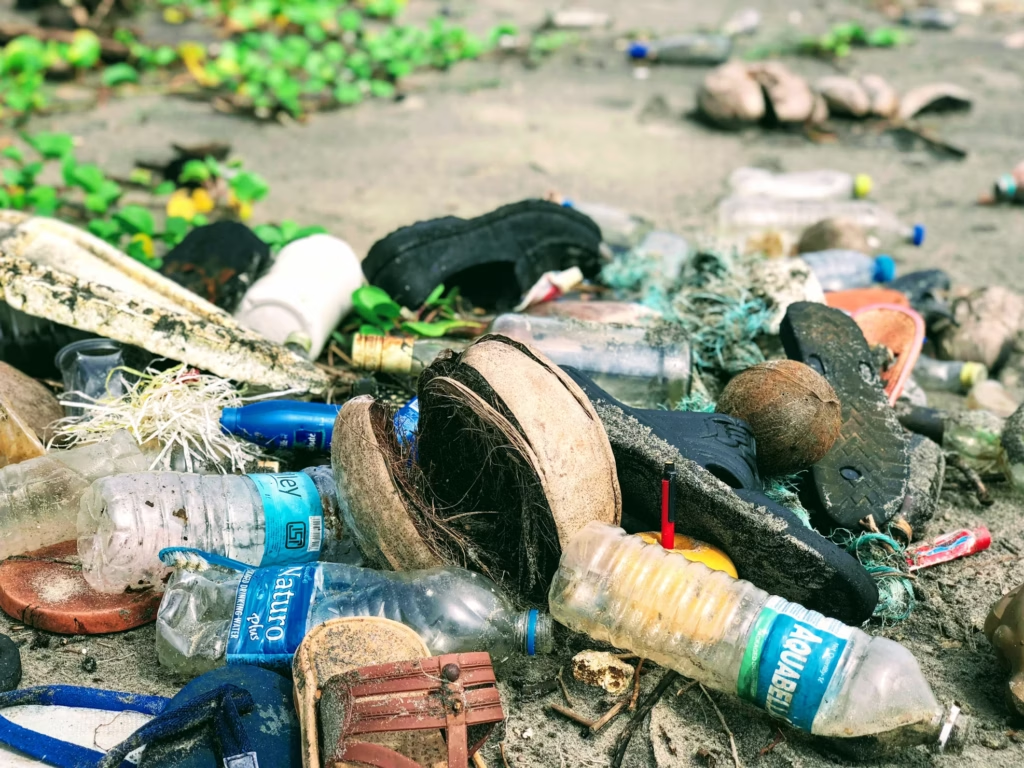
A team of researchers at the University of California, Berkeley has made a significant breakthrough in plastic recycling. They have developed a method to convert polypropylene and polyethylene, two of the most common and difficult-to-recycle plastics, into valuable gases.
Polypropylene and polyethylene are polyolefins, derived from fossil fuels. Their strong bonds make them challenging to recycle, often resulting in low-quality recycled materials or the release of harmful greenhouse gases.
The Berkeley researchers’ innovative approach involves using catalysts that efficiently break the bonds in these plastics, transforming them into propylene and isobutylene gases. These gases can then be recycled into new plastics.
“Because polypropylene and polyethylene are among the most difficult and expensive plastics to separate from each other in a mixed waste stream, it is crucial that [a recycling] process apply to both polyolefins,” the research team said in a study published in Science.
This breakthrough offers a promising solution to the global plastic waste crisis, providing a more sustainable and efficient way to recycle these commonly used plastics.