
A new PhD research programme in Scotland will gather data on feral pig populations to support future management strategies and assess the potential role of the animals in the transmission of African swine fever.
The research will focus initially on the north of Scotland, examining the size, distribution, movements and habitat preferences of feral pig populations alongside the potential disease risks they present.
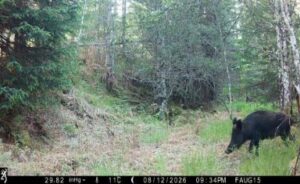
The project is being led by SBOHVM PhD student Penny Jack and will use camera traps alongside field surveys to establish a stronger evidence base for future population and disease management.
Phase one will cover three Forestry and Land Scotland (FLS) sites and neighbouring land holdings within the Great Glen, where populations of feral pigs are already known to exist.
A second phase will investigate locations where reports of feral pigs are largely anecdotal, seeking to establish whether populations are present.
Six-month field survey planned
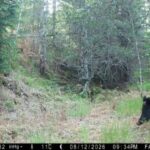
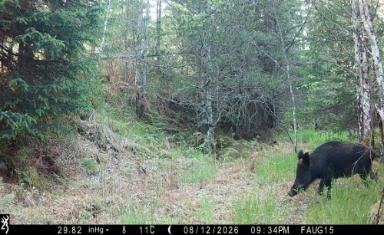
Researchers will establish a 48 sq km grid of camera traps in priority areas, collecting information over six months. Surveying could be extended for a further six months if required.
Camera data will be supplemented by field surveys looking for physical signs of feral pig activity.
The research is expected to provide information on population numbers, preferred habitats and the composition of groups, including numbers of males, females and piglets. Researchers will also examine whether the evidence can identify likely migration routes as populations move into new areas.
“Feral pig populations appear to be increasing in Scotland,” Jack said.
“A robust picture of the feral pig population is necessary to be able to plan for the future, but currently not much is known about the population of these animals beyond some citizen science sightings, which isn’t sufficiently robust intelligence.”
Data generated through the project will subsequently be used to support population models, disease risk maps and disease transmission models, as well as the development of future management strategies.
African swine fever risk under investigation
A central part of the research will examine the implications for disease control if African swine fever were to reach Scotland.
The disease is not currently present in the UK, but researchers are investigating how feral pig populations could affect its transmission and the measures required to control an outbreak.
“Were the disease to emerge, feral pigs could contribute to its spread, which could make the economic impact of the disease far more wide-reaching than would otherwise be the case,” Jack said.
The project has been reviewed by the SBOHVM Ethics Committee and is funded as a NorthWest Bio BBSRC PhD project.
Evidence to support future management
Forestry and Land Scotland said better information about the animals is increasingly important for land managers dealing with their environmental, infrastructure and disease impacts.
Feral pigs can damage agricultural land and sensitive habitats through rooting and can also damage fencing and other infrastructure.
FLS Area Wildlife Manager Tom Cameron said: “Feral pigs are an increasing management, control and disease risk issue for all land managers in the affected areas across Scotland.
“Resource pressure is something that we all feel so it is important that we establish a solid evidence base to guide policy and practice development.
“This research is a great step forward for a coordinated approach to managing their numbers.”
Members of the public can also contribute to the evidence base by recording feral pig sightings, adding another source of information alongside the structured camera and field surveys.